
Anúncios
Learning to play the accordion opens up a world of musical expression, rich traditions, and captivating melodies that span cultures and generations.


The accordion is a fascinating instrument that combines melody, harmony, and rhythm in a compact, portable package. Whether you’re drawn to folk music, tango, jazz, or classical compositions, the accordion offers endless possibilities for creative expression.
Many aspiring musicians feel intimidated by the accordion’s seemingly complex design, but with the right approach and consistent practice, anyone can master this beautiful instrument. This comprehensive guide will walk you through everything you need to know to start your accordion journey.
🎵 Understanding Your Accordion: Types and Components
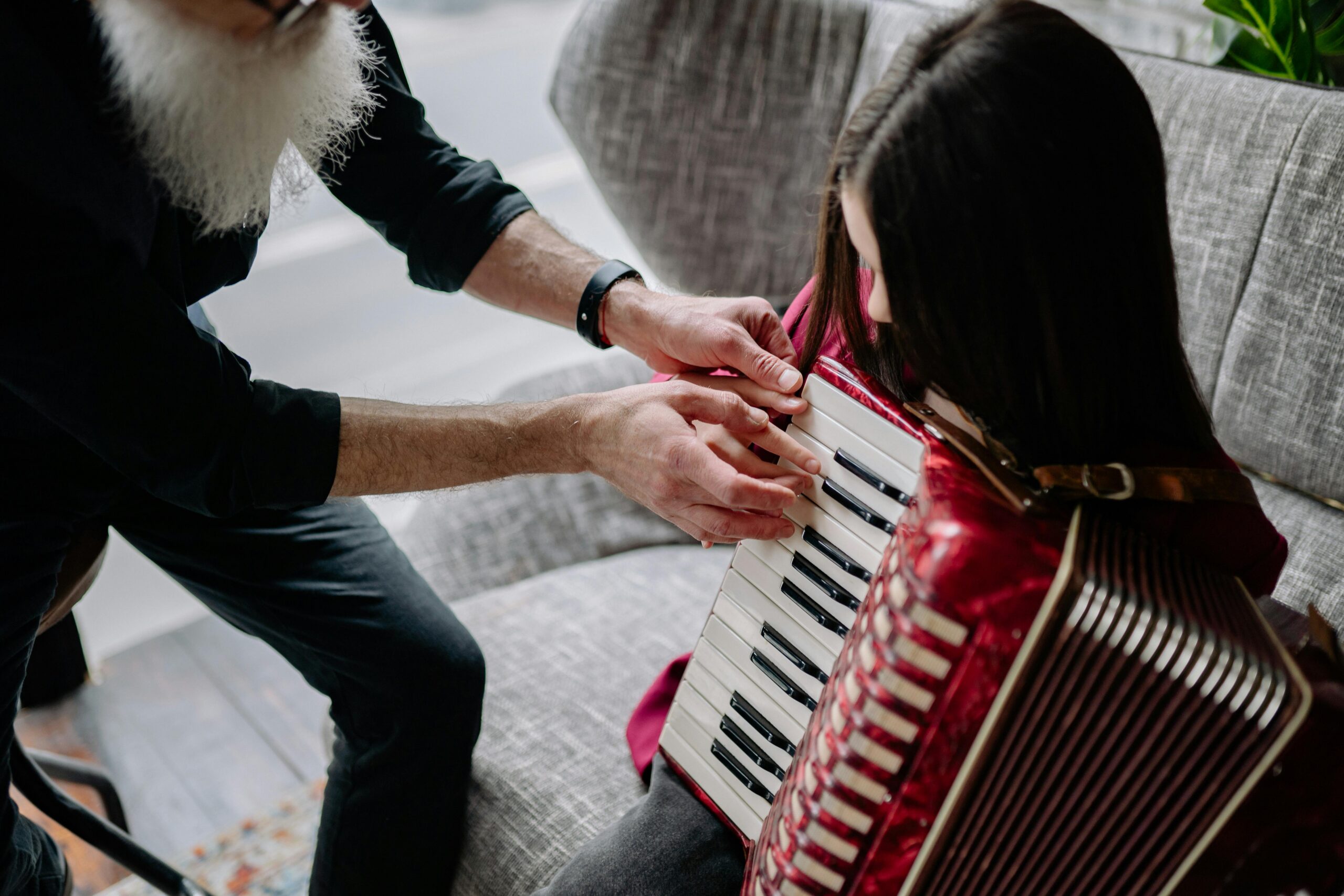
Before diving into playing techniques, it’s essential to understand the different types of accordions available. The piano accordion features a keyboard similar to a piano on the right side, making it ideal for those with piano experience. The button accordion, common in folk traditions, uses buttons instead of keys and comes in various configurations.
The accordion consists of three main sections: the right-hand keyboard or buttons for melody, the left-hand button board for bass and chords, and the bellows that produce sound by pushing air through reeds. Understanding how these components work together is fundamental to developing proper technique.
The bellows act as the instrument’s lungs, and learning to control airflow is crucial. Each button on the left side typically produces either a bass note or a pre-set chord, allowing you to create full accompaniment while playing melody with your right hand.
🎼 Setting Up for Success: Posture and Holding Position
Proper posture forms the foundation of good accordion playing. Sit upright in a chair without armrests, keeping your back straight and feet flat on the floor. The accordion should rest comfortably on your left thigh, secured by straps over both shoulders.
Adjust the shoulder straps so the instrument sits snugly against your chest without restricting breathing or movement. The right strap should be slightly tighter than the left to support the weight distribution properly. Your arms should hang naturally, with elbows relaxed and positioned away from your body.
The keyboard should be easily accessible to your right hand without reaching or straining. Your left hand should comfortably reach the bass buttons while maintaining a relaxed wrist position. Proper setup prevents fatigue and injury during extended practice sessions.
🎹 First Steps: Right Hand Technique and Melody
Start by familiarizing yourself with the right-hand keyboard layout. On a piano accordion, the white and black keys follow the same pattern as a standard piano. Begin by locating middle C and practicing simple scales to build finger strength and coordination.
Finger positioning follows similar principles to piano playing. Keep your fingers curved naturally, as if holding a small ball. Your thumb through pinky should be numbered 1 through 5, helping you follow fingering notations in sheet music.
Practice playing simple melodies like “Mary Had a Little Lamb” or “Twinkle, Twinkle Little Star” using only your right hand at first. Focus on accuracy and smooth transitions between notes rather than speed. This builds muscle memory and confidence before adding bellows control.
💨 Mastering Bellows Control: The Heart of Expression
Bellows technique separates mediocre accordion players from truly expressive musicians. The bellows don’t just produce sound—they create dynamics, phrasing, and emotional nuance in your music.
Begin by practicing opening and closing the bellows slowly and evenly without playing any notes. Listen for any air leaks or uneven sounds. The motion should come from your left arm extending and contracting smoothly, not from jerky movements or excessive force.
Learn to coordinate bellows direction changes with musical phrases. Generally, you’ll change direction at natural breathing points in the melody, similar to where a singer would take a breath. This creates musical phrasing that sounds natural and flowing.

Practice crescendos and diminuendos by gradually increasing or decreasing bellows speed and pressure. This dynamic control adds depth and emotion to your performances, transforming simple melodies into captivating musical statements.
🎸 Left Hand Fundamentals: Bass and Chord Buttons
The left-hand button board, called the Stradella bass system on most accordions, follows a logical pattern once you understand its layout. The buttons are arranged in columns, with bass notes in the innermost rows and chord variations in the outer rows.
Start by locating the reference button, usually marked with a dimple or indentation. This is typically the C bass note. From this anchor point, you can navigate the entire bass board by feel, which is essential since you can’t see the buttons while playing.
The standard layout includes columns for counter-bass, bass notes, major chords, minor chords, dominant seventh chords, and diminished chords. Each row follows the circle of fifths pattern, making chord progressions intuitive once memorized.
Begin practicing simple bass patterns, alternating between bass notes and their corresponding major chords. This oompah pattern forms the foundation of countless accordion pieces across multiple genres.
📚 Building Your Practice Routine: Daily Exercises
Consistency trumps marathon practice sessions. Dedicate 20-30 minutes daily to accordion practice rather than sporadic longer sessions. This regular engagement builds muscle memory more effectively and prevents burnout.
Structure your practice time efficiently. Spend the first five minutes warming up with scales and simple exercises. Dedicate the next segment to technical skills like bellows control or left-hand coordination. Use the remaining time to work on actual pieces or songs.
Set specific, achievable goals for each practice session. Rather than vague intentions like “practice accordion,” aim for concrete objectives such as “learn the first eight bars of this piece” or “master the F major scale smoothly.”
Record your practice sessions periodically. Listening back reveals issues you might not notice while playing, such as uneven rhythm, poor bellows control, or missed notes. This self-assessment accelerates improvement dramatically.
🎶 Reading Accordion Music: Understanding Notation
Accordion music uses standard musical notation with some unique elements. The treble staff shows right-hand melody, while bass notation appears on the bass clef. Some accordion scores use specialized notation for left-hand buttons, particularly in folk music traditions.
Bellows direction is sometimes indicated by symbols above the staff. An upward arrow or “P” (pull) indicates opening the bellows, while a downward arrow or “D” (draw) means closing. Following these markings helps create proper phrasing and dynamics.
Start with simple method books designed specifically for accordion. These introduce concepts progressively, building skills systematically rather than overwhelming beginners with advanced techniques. Popular methods include Palmer-Hughes, Alfred’s Teach Yourself Accordion, and the Anzaghi method.
🌟 Developing Coordination: Bringing Both Hands Together
Coordinating both hands simultaneously represents one of the biggest challenges for accordion students. The key is patience and incremental progress. Never rush this crucial developmental stage.
Practice hands separately first until each part feels comfortable and automatic. Only then attempt combining them. Start with pieces where the left hand plays simple sustained chords while the right hand carries the melody.
Slow practice is essential. Use a metronome set to a very slow tempo, ensuring perfect synchronization between hands. Gradually increase speed only after achieving consistent accuracy at slower tempos.
Focus on transition points where chord changes coincide with melody notes. These moments require special attention, as they’re where coordination typically breaks down. Isolate these measures and practice them repeatedly until smooth.
🎭 Exploring Musical Styles: Finding Your Voice
The accordion flourishes across diverse musical genres, each with distinctive techniques and traditions. Folk music, including Irish, French musette, and Eastern European styles, emphasizes rhythm and ornamentation. These traditions often use button accordions with specific tuning characteristics.
Tango accordion, particularly in Argentine tango, requires precise bellows control and dramatic phrasing. The bandoneón, a tango accordion variant, uses a unique button layout that produces the genre’s characteristic passionate sound.
Jazz accordion demands improvisational skills and harmonic knowledge. Players like Art Van Damme pioneered jazz accordion, demonstrating the instrument’s versatility beyond folk traditions. This style requires understanding chord theory and scale patterns for improvisation.
Classical accordion repertoire includes both original compositions and transcriptions of works written for other instruments. This style emphasizes technical precision, dynamic control, and interpretive musicality at the highest levels.
🔧 Maintenance and Care: Protecting Your Investment
Proper accordion maintenance ensures longevity and optimal performance. Store your instrument in its case when not in use, protecting it from temperature extremes, humidity, and dust. Accordions contain delicate reeds and mechanical components sensitive to environmental conditions.
Clean the exterior regularly with a soft, slightly damp cloth. Avoid harsh chemicals that might damage the finish or decorative elements. The keyboard can be cleaned with a cloth lightly moistened with water or specialized keyboard cleaner.
Have your accordion professionally serviced annually. Technicians check for air leaks, adjust valves, tune reeds, and address mechanical issues before they become serious problems. Regular maintenance prevents costly repairs and keeps your instrument sounding beautiful.
👥 Connecting with Other Musicians: Community and Resources
Learning accordion becomes more enjoyable and sustainable when you connect with other players. Join local accordion clubs or organizations that host meetings, workshops, and performances. These communities provide support, motivation, and valuable learning opportunities.
Online forums and social media groups connect accordion enthusiasts worldwide. Platforms like AccordionForum.com, Reddit’s accordion community, and Facebook groups offer advice, sheet music sharing, and encouragement from players at all skill levels.
Attend accordion festivals and workshops to experience diverse playing styles and learn from master musicians. Events like the Cotati Accordion Festival, All-Ireland Fleadh, and various regional gatherings celebrate the instrument and offer educational opportunities.
Consider finding a qualified teacher, even for occasional lessons. While self-teaching is possible with dedication, a good instructor identifies bad habits early, provides personalized guidance, and accelerates your progress significantly.
🎯 Overcoming Common Challenges and Frustrations
Every accordion student encounters obstacles along the learning journey. Hand independence—playing different rhythms or melodies simultaneously with each hand—frustrates many beginners. Address this by practicing each hand individually until automatic, then combining them at very slow tempos.
Bellows control often feels awkward initially. Your left arm may tire quickly, and achieving smooth transitions takes time. Build strength gradually through regular practice, and remember that even professional players continue refining bellows technique throughout their careers.
Memorizing left-hand button positions without visual reference requires patience and repetition. Use tactile markers initially if needed, and practice scales and patterns on the bass board daily. Muscle memory develops with consistent, focused practice.
Physical discomfort from the instrument’s weight is common. Ensure proper strap adjustment and posture. Take regular breaks during practice sessions. If pain persists, consult your teacher or a medical professional to prevent injury.
🚀 Advancing Your Skills: Next Steps on Your Journey
Once you’ve mastered fundamental techniques, explore advanced concepts like bellows shakes, which create tremolo effects, and register switches that change the accordion’s tonal color by activating different reed combinations.
Develop sight-reading abilities by regularly working through new music without extensive practice first. This skill proves invaluable when playing in groups or learning new repertoire quickly.
Study music theory to deepen your understanding of harmony, rhythm, and composition. Theory knowledge transforms you from someone who mechanically reproduces notes into a musician who understands and interprets music meaningfully.
Challenge yourself with increasingly complex pieces that push your technical boundaries. Balance this with continuing to play easier music you enjoy, maintaining the fun and satisfaction that motivated you to learn accordion initially.
💡 Staying Motivated: Making Practice Enjoyable
Maintain enthusiasm by regularly learning songs you genuinely love. While exercises and technical studies are important, nothing sustains motivation like playing music that moves you emotionally or brings back cherished memories.
Set both short-term and long-term goals. Short-term objectives provide frequent wins that boost confidence, while long-term goals give direction and purpose to your practice. Celebrate achievements, no matter how small they seem.
Vary your practice routine to prevent boredom. Alternate between technical exercises, new pieces, familiar favorites, improvisation, and playing along with recordings. This variety keeps practice sessions fresh and engaging.
Consider performing, even informally, for friends or family. Performance opportunities, regardless of audience size, motivate preparation and provide valuable experience managing nerves while showcasing your developing skills.
🌈 The Lifelong Rewards of Accordion Playing
Learning accordion offers rewards extending far beyond musical skill development. The instrument connects you with rich cultural traditions spanning continents and centuries, providing a tangible link to heritage and history.
Accordion playing enhances cognitive function through the complex coordination, memory, and multitasking it requires. Research shows musical training improves brain plasticity, memory, and even mathematical abilities across all age groups.
The portable nature of accordions creates spontaneous musical moments impossible with instruments requiring electricity or extensive setup. Bring your accordion to gatherings, parks, or travels, spreading joy wherever you go.
Most importantly, accordion playing provides profound personal satisfaction. The journey from struggling beginner to confident musician builds self-discipline, patience, and accomplishment that enriches all areas of life. Each practice session, each mastered piece, represents progress toward expressing yourself through this uniquely versatile instrument.
Your accordion journey begins with a single note, a simple scale, or a beloved melody. With dedication, patience, and joy in the learning process, you’ll discover capabilities you never imagined, creating music that touches hearts and celebrates the timeless magic of the accordion.
