
Anúncios
Learning to play the accordion opens up a world of musical expression, blending tradition with versatility across countless genres and cultures worldwide.


The accordion is an instrument that captivates with its unique sound and expressive capabilities. Whether you’re drawn to folk music, jazz, classical, or contemporary styles, mastering this instrument can enrich your musical journey in profound ways.
Starting your accordion adventure might seem daunting at first, but with the right guidance and consistent practice, anyone can learn to create beautiful melodies. This comprehensive guide will walk you through everything you need to know to begin playing accordion confidently and enjoyably.
🎵 Understanding the Accordion: Types and Components
Before diving into techniques, it’s essential to understand what kind of accordion suits your musical goals. There are several types, each with distinct characteristics that cater to different musical styles and preferences.
The piano accordion features a keyboard similar to a piano on the right-hand side, making it intuitive for those with piano experience. Button accordions, on the other hand, use buttons for both melody and bass, offering a more compact design and different tonal possibilities.
Diatonic accordions are popular in folk music traditions and are tuned to specific scales, while chromatic accordions provide access to all notes in the musical spectrum. Understanding these differences helps you choose the instrument that aligns with your musical aspirations.
Key Components of the Accordion
The accordion consists of several essential parts working together to produce its characteristic sound. The bellows act as the instrument’s lungs, controlling air flow and dynamics. The reeds vibrate to create sound when air passes through them, and the buttons or keys determine which reeds produce notes.
The bass side typically features a system of buttons arranged in rows, providing accompaniment patterns and bass notes. Learning how the instrument’s anatomy functions helps you develop better control and understanding of sound production.
🎹 Getting Started: Proper Posture and Hand Position
Establishing correct posture from the beginning prevents physical strain and promotes better sound quality. Sit upright with your feet flat on the floor, or stand with balanced weight distribution if you prefer playing standing up.
The accordion should rest comfortably against your chest, supported by shoulder straps adjusted to the proper length. Your left arm controls the bellows while your right hand navigates the keyboard or buttons for melody.
Hand position matters significantly for developing technique. Keep your wrists relaxed and slightly curved, allowing fingers to move freely across keys or buttons. Tension in your hands or shoulders will limit your playing ability and cause fatigue.
Bellows Control: The Foundation of Expression
Mastering bellows technique is crucial for creating dynamic and expressive music. The bellows don’t just provide air—they’re your primary tool for volume control, articulation, and musical phrasing.
Practice opening and closing the bellows smoothly and evenly, maintaining consistent pressure. Start with simple exercises, playing single notes while focusing solely on bellows movement. Gradual control development allows you to create crescendos, diminuendos, and accents naturally.

📚 Learning the Bass System
The left-hand bass system often intimidates beginners, but it follows logical patterns once understood. Standard bass accordions use the Stradella bass system, organizing buttons in rows representing bass notes, counter-bass notes, major chords, minor chords, seventh chords, and diminished chords.
Each row has a specific function, and buttons are arranged in the circle of fifths, creating a systematic layout that becomes intuitive with practice. Start by familiarizing yourself with the fundamental bass row and the major chord row.
Practice simple bass patterns using only these two rows before adding complexity. Common patterns like “oom-pah” (bass-chord-bass-chord) form the foundation of countless accordion accompaniments across musical genres.
Coordinating Both Hands
One of the biggest challenges for accordion students is coordinating melody and accompaniment simultaneously. Begin with extremely simple melodies using just a few notes while maintaining a steady bass pattern.
Break complex pieces into small sections, practicing hands separately before combining them. Slow practice with a metronome builds coordination gradually and ensures rhythmic accuracy. Speed develops naturally once the coordination becomes automatic.
🎼 Reading Music and Tablature
While some accordion players learn by ear, reading music expands your repertoire significantly and helps you understand musical structure. Accordion music typically uses treble clef for the right hand and bass clef for the left, though bass notation often uses chord symbols instead of traditional notation.
If you’re new to reading music, start with simple exercises focusing on rhythm first, then pitch. Many accordion methods combine standard notation with fingering suggestions and bellows direction indicators.
Tablature systems also exist for button accordions, showing which buttons to press rather than musical notes. These can be helpful starting points, but developing notation reading skills opens far more musical doors.
🎶 Essential Techniques for Beginners
Building a solid technical foundation ensures steady progress and prevents bad habits. Focus on these fundamental techniques during your early learning stages.
Scales and Exercises
Scales might seem tedious, but they’re invaluable for developing finger independence, muscle memory, and familiarity with the keyboard layout. Start with C major scale, practicing slowly with even rhythm and consistent bellows pressure.
Gradually introduce other major scales, then minor scales, arpeggios, and chord progressions. These exercises improve technical proficiency while training your ear to recognize musical patterns.
Articulation and Phrasing
Articulation refers to how individual notes are connected or separated. Legato playing creates smooth, connected phrases, while staccato produces short, detached notes. The bellows direction changes naturally create articulation points in your playing.
Practice deliberate articulation by controlling exactly when you reverse bellows direction. Musical phrasing—grouping notes into coherent musical sentences—develops through careful attention to melody contour and breathing points.
🎯 Setting Practice Goals and Building Routine
Consistent practice yields better results than sporadic marathon sessions. Even 20-30 minutes daily produces more progress than occasional long practice periods. Structure your practice time to maximize effectiveness and maintain motivation.
Divide practice sessions into segments: warm-up exercises, technical work, repertoire practice, and sight-reading or improvisation. This variety keeps sessions engaging while addressing different skill areas.
Set specific, achievable goals for each practice session rather than vague intentions. “Master the first eight measures of this piece” works better than “practice this song.” Tracking progress in a practice journal helps maintain motivation and identifies areas needing attention.
Overcoming Common Challenges
Every accordion student faces obstacles along the learning path. Coordinating both hands while controlling bellows challenges beginners universally. Break difficult passages into tiny sections, practicing slowly until coordination becomes automatic.
Physical discomfort often indicates posture problems or excessive tension. If you experience pain, reassess your playing position and ensure you’re taking regular breaks. The accordion’s weight requires adjustment, but playing shouldn’t hurt.
Plateaus happen to everyone—periods where progress seems stalled despite consistent effort. During these times, explore different musical styles, learn easier pieces for enjoyment, or focus on aspects of playing you’ve neglected. Progress continues even when it’s not immediately apparent.
🌟 Exploring Different Musical Styles
The accordion’s versatility shines across numerous musical genres. Traditional folk music from various cultures features accordion prominently—polkas, waltzes, tangos, and regional folk styles showcase the instrument’s expressive range.
Classical accordion repertoire includes original compositions and transcriptions spanning baroque through contemporary periods. Jazz accordion introduces improvisation and complex harmonic structures, while contemporary musicians incorporate accordion into rock, pop, and experimental music.
Exploring diverse styles keeps learning fresh and develops well-rounded musicianship. Each genre teaches different technical and interpretive skills that transfer across musical boundaries.
📱 Using Technology to Enhance Learning
Modern technology offers excellent resources for accordion students. Mobile apps provide virtual practice instruments, allowing you to explore fingering patterns and bass systems without your physical accordion. These tools are particularly useful for understanding bass button layouts.
Video tutorials on platforms like YouTube offer visual demonstrations of techniques and pieces. Watching experienced players reveals nuances difficult to convey through written instructions alone.
Recording your practice sessions helps identify areas needing improvement that you might not notice while playing. Listening critically to your recordings accelerates progress by highlighting both strengths and weaknesses objectively.
👥 Finding Community and Performance Opportunities
Connecting with other accordion players enriches your learning experience tremendously. Local accordion clubs, if available, provide performance opportunities, workshops, and social connections with fellow enthusiasts.
Online communities offer forums for asking questions, sharing progress, and discovering resources. Social media groups dedicated to accordion playing create virtual communities spanning geographical boundaries.
Performance opportunities, even informal ones, accelerate learning by providing goals and exposing you to the experience of playing for others. Start small—play for family or friends—before pursuing larger performance venues as your confidence grows.
🛠️ Maintaining Your Accordion
Proper care ensures your instrument remains in optimal playing condition. Store your accordion in its case when not in use, protecting it from dust, humidity extremes, and temperature fluctuations.
Handle the instrument carefully, avoiding impacts that could damage reeds or mechanisms. Clean the exterior gently with appropriate materials, never using harsh chemicals that might damage finishes.
Professional maintenance by qualified accordion technicians keeps your instrument functioning properly. Reeds may eventually need tuning, and mechanical components require periodic adjustment. Establishing a relationship with a reliable accordion technician protects your investment.
🚀 Advancing Your Skills Beyond Basics
Once foundational skills are solid, numerous paths for advancement await. Advanced techniques like bellows shake, register changes, and complex ornamentation add expressive possibilities to your playing.
Improvisation skills develop musical creativity and deepen understanding of harmony and melody. Start with simple improvisations over familiar chord progressions, gradually increasing complexity as confidence builds.
Composition allows ultimate personal expression through your instrument. Even simple original pieces develop musicality and provide unique satisfaction. Your accordion journey is uniquely yours—embrace the creative possibilities this remarkable instrument offers.
💡 Staying Motivated Throughout Your Journey
Learning accordion is a marathon, not a sprint. Maintaining motivation through inevitable challenges requires strategies that keep the experience enjoyable and rewarding.
Balance challenging material with pieces you can play comfortably and enjoy. Music should bring joy, not just frustration. Celebrate small victories—each new technique mastered or piece learned represents genuine progress.
Remember why you started learning accordion. Whether for personal enjoyment, cultural connection, or musical expression, reconnecting with your original motivation helps during difficult periods.
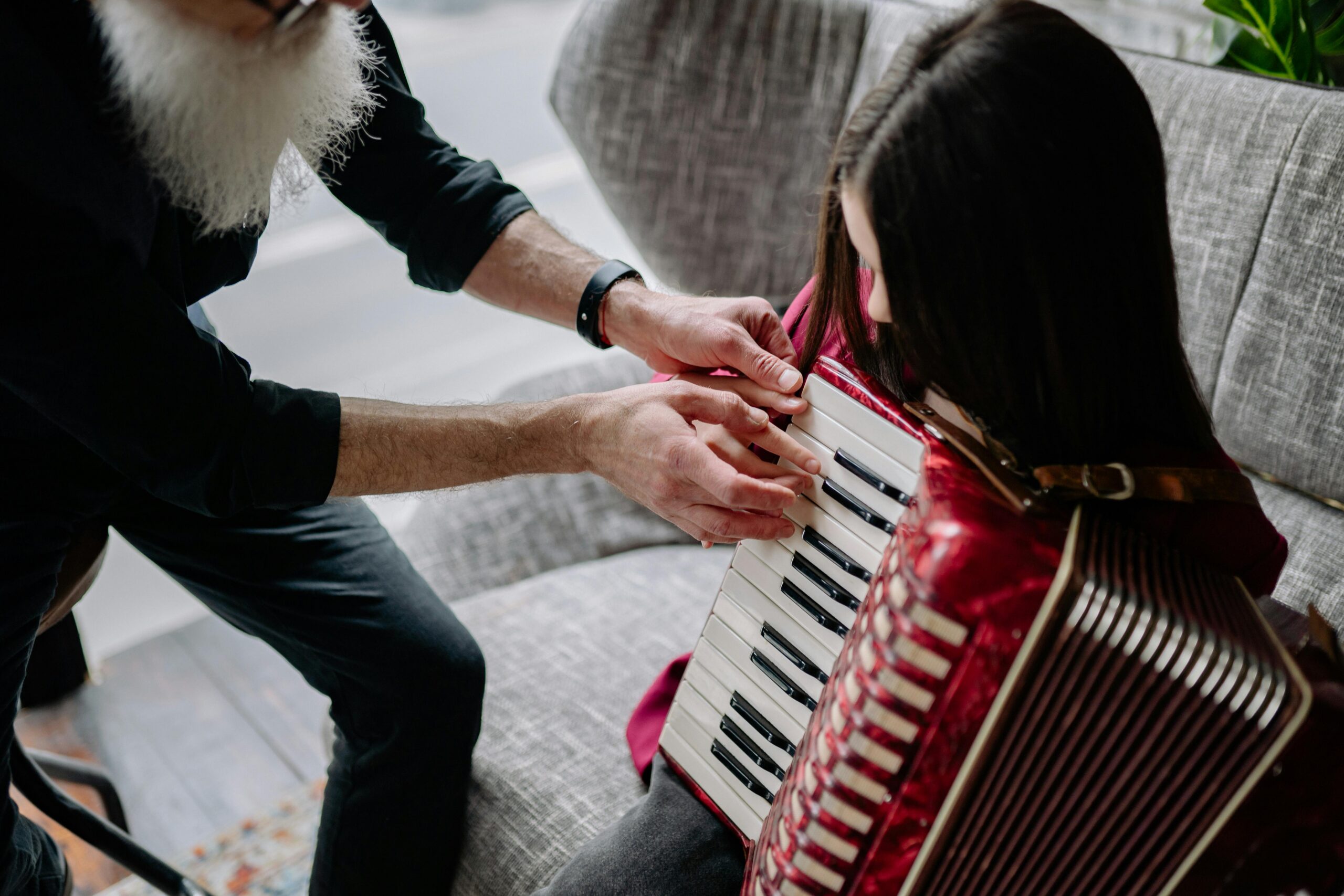
Finding a teacher, even for occasional lessons, provides guidance, accountability, and personalized feedback that accelerates progress. Self-teaching is possible, but expert instruction identifies issues and solutions you might never discover independently.
The accordion offers lifelong learning potential—there’s always something new to discover, another style to explore, or deeper expression to achieve. Embrace the journey itself rather than fixating solely on destinations. Every practice session brings you closer to the musician you aspire to become.
Your accordion journey begins with a single note and grows through consistent effort, curiosity, and passion. The instrument’s rich history and contemporary relevance ensure you’re joining a vibrant, welcoming community of musicians worldwide. Whether you dream of playing traditional folk tunes, jazz standards, classical repertoire, or creating entirely new sounds, the accordion awaits your exploration. Pick up your instrument, press those buttons or keys, move those bellows, and let your musical story unfold. 🎵
