
Anúncios
Learning to play the accordion opens a world of musical expression, cultural richness, and creative possibilities that few instruments can match.


The accordion has captivated audiences for centuries with its distinctive sound and versatility across musical genres. From traditional folk music to contemporary pop, this remarkable instrument continues to charm musicians and listeners alike. Whether you’re drawn to polka, tango, zydeco, or classical compositions, mastering the accordion offers a rewarding journey filled with artistic growth.
Starting your accordion journey might seem intimidating at first, but with proper guidance and consistent practice, anyone can learn to create beautiful melodies. This comprehensive guide will walk you through everything you need to know about learning to play the accordion, from choosing your first instrument to developing advanced techniques that will elevate your musical abilities.
🎵 Understanding the Accordion’s Unique Characteristics
The accordion belongs to the family of free-reed instruments, producing sound by forcing air through metal reeds using bellows. This distinctive mechanism creates the instrument’s characteristic warm, resonant tone that has made it beloved across cultures worldwide.
There are several types of accordions available, each with unique features. The piano accordion features a keyboard similar to a piano on the right side, making it more intuitive for those with piano experience. Button accordions, popular in folk traditions, use buttons instead of keys and often require a different fingering approach. Diatonic accordions produce different notes depending on whether you’re pushing or pulling the bellows, adding an extra layer of complexity.
Understanding your accordion’s components is essential before diving into playing. The right-hand keyboard or buttons handle melody, while the left-hand buttons control bass notes and chords. The bellows serve as the instrument’s lungs, controlling volume and expression. Straps keep the instrument securely positioned, allowing your hands to move freely.
🛒 Choosing Your First Accordion
Selecting the right accordion significantly impacts your learning experience. For beginners, a 48 or 60 bass piano accordion typically offers the best balance between functionality and manageability. These models provide enough range for most popular songs without being overly heavy or complicated.
Quality matters more than brand recognition when starting out. Look for an instrument with responsive keys or buttons, smooth bellows action, and reeds that sound clear across all registers. Consider purchasing from reputable dealers who offer warranties and return policies, especially if buying online.
Budget considerations are important but shouldn’t compromise quality entirely. Entry-level accordions range from a few hundred to several thousand dollars. If budget constraints are tight, quality used instruments often provide excellent value. Many music stores offer rental programs, allowing you to try before committing to a purchase.
Weight and size deserve special attention, particularly for younger players or those with physical limitations. Full-size accordions can weigh 20-30 pounds, which becomes significant during extended practice sessions. Smaller models sacrifice some range but offer greater comfort and portability.
🎹 Mastering the Fundamentals of Posture and Positioning
Proper posture forms the foundation of good accordion technique. Sit upright with both feet flat on the floor, maintaining a straight back without tension. The accordion should rest comfortably against your chest, secured with shoulder straps adjusted to distribute weight evenly.
The instrument should sit slightly to your right side, allowing your left arm freedom to operate the bellows and bass buttons. Your right arm should move naturally over the keyboard or buttons without reaching or straining. This balanced position prevents fatigue and promotes fluid movement.
Strap adjustment significantly affects playing comfort. Shoulder straps should be tight enough to hold the instrument securely but loose enough to allow chest expansion for breathing. The bass strap on your left hand should allow your fingers to reach all buttons comfortably while maintaining control.

💨 Developing Bellows Control Techniques
Bellows technique separates mediocre accordion players from skilled musicians. The bellows don’t simply provide air—they control dynamics, phrasing, and musical expression. Learning to manipulate them skillfully requires dedicated practice and mindful attention.
Start with simple exercises: open and close the bellows slowly while playing a single note, maintaining consistent volume. This develops the steady pressure control needed for smooth sustained tones. Gradually vary the speed and pressure to create crescendos and diminuendos.
Direction changes require special attention. Smooth transitions between opening and closing prevent audible interruptions in your musical phrases. Practice changing direction while holding a note, keeping the sound continuous and even. This skill becomes crucial when playing longer melodies that require multiple bellows reversals.
Bellows shakes and other ornamentations add character to your playing. These techniques involve rapid, controlled movements that create vibrato effects or rhythmic accents. Start slowly, ensuring each movement remains controlled and musical rather than erratic.
🎼 Learning to Read Accordion Music Notation
Accordion sheet music uses standard musical notation with some unique symbols. The treble clef shows right-hand melodies, while bass clef or specialized chord notation indicates left-hand accompaniment. Understanding both systems expands your repertoire possibilities.
Bellows direction indicators appear in many accordion scores, showing when to push or pull. Arrows or letters (P for push, D for draw) guide your bellows movements. While not always mandatory, following these suggestions often improves phrasing and makes playing easier.
Register symbols indicate which reed sets to activate, changing the accordion’s tone color. These symbols vary between notation systems, so familiarize yourself with the conventions used in your music. Experimenting with different registers reveals the accordion’s tonal versatility.
Chord charts for the left hand simplify accompaniment learning, especially for beginners. These diagrams show button positions for common chords, allowing you to accompany melodies quickly. As you progress, understanding chord theory helps you anticipate button positions intuitively.
👆 Right-Hand Technique Development
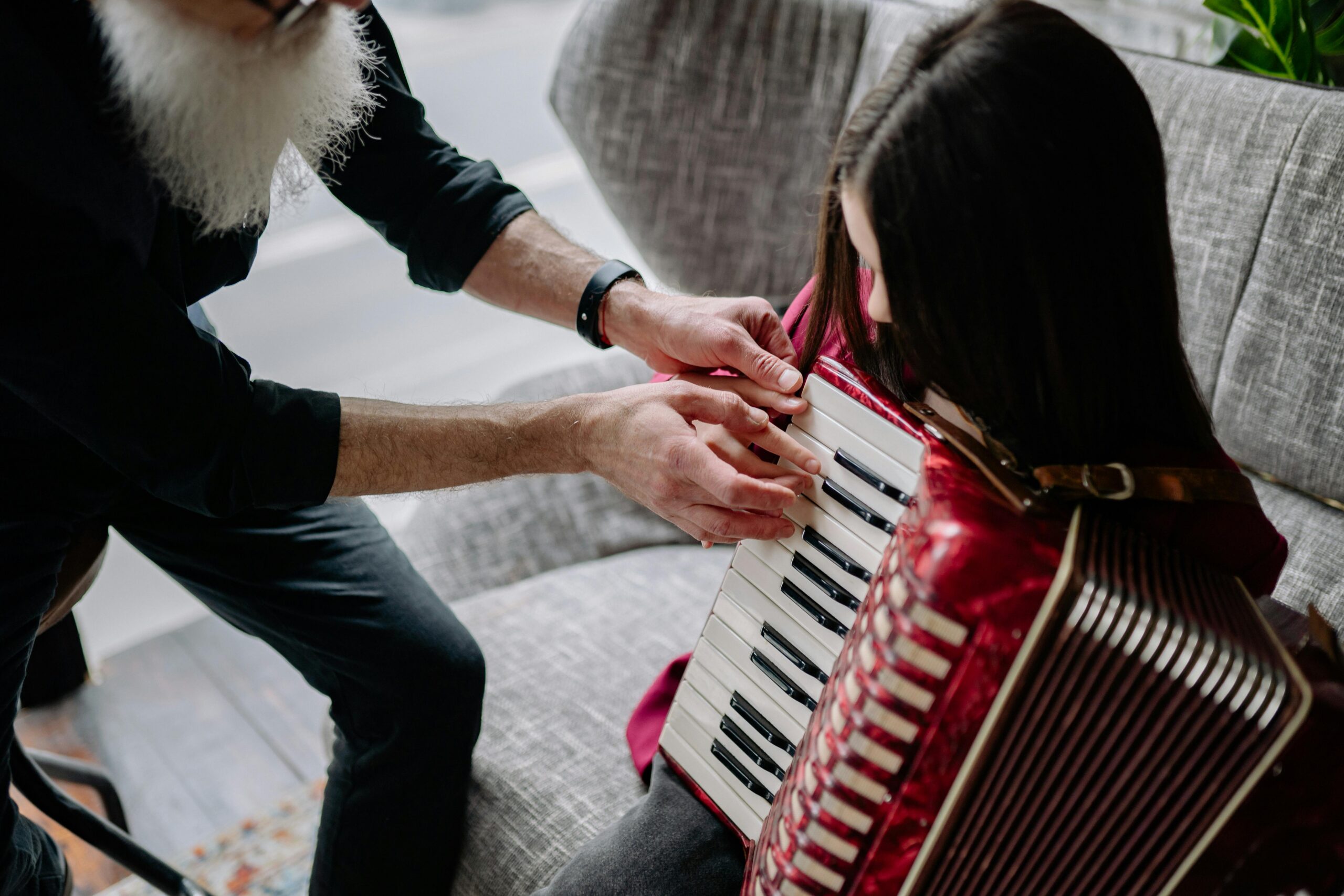
Right-hand technique on piano accordions resembles piano playing but requires adaptations for the vertical keyboard position. Curve your fingers naturally, striking keys with fingertips rather than flat fingers. This position provides better control and allows faster, more precise movements.
Finger numbering follows piano convention: thumb is 1, index finger is 2, through pinky as 5. Efficient fingering patterns minimize hand movement and facilitate smooth passages. Many method books provide suggested fingerings, but developing the ability to determine optimal fingerings independently proves invaluable.
Scale practice builds technical foundation and finger independence. Start with C major, playing slowly with proper fingering. Gradually increase tempo as accuracy improves. Expand to other keys and scale patterns, including minor scales and arpeggios.
Articulation varies from staccato (short, detached notes) to legato (smooth, connected notes). The bellows work in conjunction with finger technique to achieve different articulations. Staccato involves quick finger movements and brief bellows pulses, while legato requires smooth finger transitions with steady bellows pressure.
🎯 Left-Hand Bass and Chord Mastery
The left-hand button system initially confuses many beginners, but follows a logical layout. The Stradella bass system, most common on standard accordions, arranges buttons in rows: bass notes, counter-bass notes, major chords, minor chords, seventh chords, and diminished chords.
Finding the reference point is crucial. Most accordions have a marked button (often the C bass note) with a distinctive shape or indentation. This tactile reference allows you to navigate the button board without looking, essential since you can’t see the left hand while playing.
Start by memorizing the bass note row, learning to locate fundamental bass notes by feel. Practice simple bass lines, alternating between different notes while maintaining bellows control. Once comfortable with bass notes, introduce chord buttons gradually.
Chord progressions form the backbone of most musical accompaniment. Common progressions like I-IV-V-I (in C major: C-F-G-C) appear in countless songs. Practice these patterns in different keys, developing muscle memory for smooth chord changes.
📚 Essential Practice Routines for Steady Progress
Consistent practice trumps occasional marathon sessions. Twenty to thirty minutes daily produces better results than sporadic longer practices. Regular engagement builds muscle memory and reinforces learning before forgetting occurs.
Structure practice sessions for maximum efficiency. Begin with warm-up exercises: scales, arpeggios, and bellows control drills. Move to technical studies addressing specific challenges, then work on repertoire pieces. End with something enjoyable that reinforces your motivation.
Slow practice is fast practice. Playing passages slowly with perfect accuracy trains your brain and muscles correctly. Speed develops naturally as accuracy becomes automatic. Resist the temptation to play faster than you can execute cleanly.
Recording yourself provides valuable feedback. Listening objectively reveals issues you might miss while concentrating on playing. Regular recordings also document your progress, providing motivation when improvement feels slow.
🎶 Building Your Accordion Repertoire
Start with simple folk songs and traditional melodies. These pieces typically feature straightforward melodies and basic chord progressions, perfect for developing fundamental skills. Songs like “Oh! Susanna” or “Amazing Grace” build confidence while sounding recognizable and pleasing.
Gradually introduce pieces from various genres. Polkas develop rhythmic precision and bellows technique. Waltzes teach flowing, lyrical playing. Tangos combine drama with technical challenges. Classical transcriptions expand your musical understanding and technical capabilities.
Learning by ear complements reading sheet music. Try figuring out simple melodies without notation, developing your musical ear. This skill proves invaluable when playing in informal settings or learning songs quickly.
Challenging yourself appropriately maintains motivation. Choose pieces slightly beyond your current ability—difficult enough to require effort but achievable with focused practice. Success builds confidence, while insurmountable difficulty discourages continued effort.
🔧 Maintenance and Care for Your Accordion
Regular maintenance preserves your instrument’s condition and sound quality. Store your accordion in its case when not in use, protecting it from dust, humidity extremes, and temperature fluctuations. Keep it away from direct sunlight and heating sources.
Clean the exterior regularly with a soft, slightly damp cloth. Avoid harsh chemicals that might damage the finish. The keyboard or buttons require occasional cleaning to remove accumulated oils from your fingers.
Bellows tape occasionally requires attention. Small tears should be repaired promptly to prevent air leaks that affect sound quality. Professional repair is recommended for significant damage.
Professional servicing every few years maintains optimal performance. Technicians can adjust action, tune reeds, replace worn felts, and address issues beyond basic maintenance. This investment extends your instrument’s lifespan and preserves its sound quality.
👥 Finding Community and Continuing Your Journey
Connecting with other accordion enthusiasts accelerates learning and maintains motivation. Local accordion clubs offer opportunities to meet players of all levels, participate in jam sessions, and attend workshops. These communities provide support, encouragement, and valuable learning resources.
Online forums and social media groups connect accordion players worldwide. These platforms allow you to ask questions, share progress, and discover new music and techniques. Video tutorials and online lessons supplement traditional learning methods.
Attending accordion festivals and concerts inspires continued growth. Watching skilled performers demonstrates possibilities for your own playing while exposing you to different styles and approaches. Many festivals offer workshops and masterclasses with renowned accordionists.
Consider finding a teacher once you’ve established basic skills. A qualified instructor provides personalized feedback, corrects developing bad habits, and guides your technical development efficiently. Even occasional lessons significantly benefit your progress.
🌟 Overcoming Common Challenges and Frustrations
Every accordionist encounters obstacles during their learning journey. Coordinating both hands while controlling bellows initially feels overwhelming. Break complex tasks into smaller components, practicing each element separately before combining them.
Physical discomfort often affects beginners. Shoulder and back pain typically indicate posture problems or improperly adjusted straps. Reassess your positioning and take frequent breaks during practice sessions. Building strength and endurance takes time.
Progress plateaus are normal and temporary. When improvement stalls, revisit fundamentals, explore new repertoire, or take a brief break to return with fresh perspective. Plateaus often precede breakthrough moments where everything suddenly clicks.
Comparing yourself to others undermines confidence and enjoyment. Everyone progresses at their own pace, influenced by practice time, previous musical experience, and individual aptitude. Focus on your personal growth rather than measuring yourself against others.
🎊 Embracing the Joy of Accordion Playing
The accordion’s unique charm lies in its ability to be both melody and accompaniment simultaneously. This self-sufficient quality makes it perfect for solo performances or adding depth to ensemble settings. As your skills develop, you’ll discover endless possibilities for musical expression.
Cultural connections through accordion music span the globe. From French musette to Mexican norteño, Irish folk to Italian folk songs, the accordion carries rich traditions. Exploring these styles connects you with musical heritage and broadens your artistic perspective.
Performance opportunities arise naturally as you improve. Local community events, open mic nights, and family gatherings welcome accordion music. Sharing your music with others brings joy to listeners and deepens your own satisfaction with your accomplishments.
The journey of learning accordion never truly ends. There’s always a new technique to master, a different style to explore, or a challenging piece to conquer. This endless potential for growth keeps the experience fresh and engaging throughout your musical life.
Remember that every accomplished accordionist once struggled with the basics just as you might be now. Patience, persistence, and genuine love for the music will carry you through challenges and reward you with the incredible satisfaction of creating beautiful melodies on this magnificent instrument. Your accordion journey is uniquely yours—embrace it with enthusiasm and let the music guide your way forward.
