
Anúncios
5G technology is transforming how we connect, communicate, and interact with the digital world, bringing unprecedented speed and reliability to mobile networks.


The fifth generation of wireless technology represents more than just faster internet on your smartphone. It’s a fundamental shift in how devices communicate, paving the way for innovations we’ve only imagined in science fiction. From autonomous vehicles to smart cities, 5G is the backbone of tomorrow’s connected world.
As networks continue to expand globally, understanding what 5G offers becomes essential for businesses, consumers, and technology enthusiasts alike. This revolutionary technology promises to reshape industries, enhance daily experiences, and unlock possibilities that previous generations of mobile networks simply couldn’t support.
🚀 What Makes 5G Different From Previous Generations
Unlike its predecessors, 5G isn’t merely an incremental upgrade. While 4G brought us reliable mobile internet and streaming capabilities, 5G multiplies those capabilities exponentially. The technology operates on three different spectrum bands, each serving specific purposes and use cases.
The low-band spectrum provides wide coverage similar to 4G but with improved speeds. Mid-band spectrum offers a balance between coverage and performance, delivering noticeably faster speeds across urban and suburban areas. High-band spectrum, often called millimeter wave (mmWave), delivers blazing-fast speeds but with limited range and penetration.
Speed comparisons tell an impressive story. While 4G networks typically deliver download speeds between 15-50 Mbps, 5G can theoretically reach speeds up to 20 Gbps. In real-world conditions, users commonly experience speeds between 100-900 Mbps, depending on location and network conditions.
Latency represents another game-changing improvement. The delay between sending and receiving data drops from around 50 milliseconds on 4G to as low as 1 millisecond on 5G networks. This near-instantaneous response time enables applications requiring real-time feedback, from remote surgery to competitive gaming.
📱 Real-World Benefits for Everyday Users
For smartphone users, 5G transforms the mobile experience in tangible ways. Downloading a full-length HD movie that previously took several minutes now completes in seconds. Streaming 4K video becomes seamless, without buffering or quality drops even in crowded areas.
Video calls gain crystal-clear quality with minimal lag, making remote work and virtual meetings feel more natural and productive. Cloud gaming services finally deliver on their promise, allowing users to play graphics-intensive games on modest devices without expensive hardware.
Social media enthusiasts benefit from instant uploads of high-resolution photos and videos. Content creators can livestream in 4K quality directly from their smartphones, opening new creative possibilities without professional equipment.

Augmented reality applications become practical for everyday use. Navigation apps can overlay detailed directions onto live camera views with precision. Shopping apps let customers visualize furniture in their homes with realistic accuracy before purchasing.
🏭 Industrial and Business Applications Driving Innovation
Manufacturing facilities leverage 5G to create truly smart factories. Sensors monitor equipment health in real-time, predicting maintenance needs before breakdowns occur. Robotic systems coordinate complex tasks with millisecond precision, increasing productivity while reducing errors.
Healthcare institutions are pioneering remote medical procedures enabled by 5G’s low latency. Surgeons can operate robotic instruments from distant locations, bringing specialized expertise to underserved areas. Paramedics transmit patient data and high-definition video to hospitals during transport, allowing emergency rooms to prepare more effectively.
Retail environments transform through enhanced customer experiences. Smart mirrors in clothing stores suggest complementary items and allow virtual try-ons. Stores track inventory in real-time, automatically reordering products and optimizing shelf placement based on customer behavior patterns.
Agriculture benefits from precision farming techniques impossible with previous networks. Drones monitor crop health across vast fields, identifying problem areas requiring attention. Automated irrigation systems respond to real-time soil conditions, conserving water while maximizing yields.
🌆 Smart Cities and Infrastructure Transformation
Urban planners envision cities where everything connects intelligently. Traffic lights adjust timing based on real-time vehicle flow, reducing congestion and emissions. Parking systems guide drivers directly to available spots, eliminating wasteful searching.
Public safety improves through networked surveillance and emergency response systems. First responders receive real-time building layouts and hazard information during emergencies. Crowd monitoring systems detect unusual patterns, helping prevent incidents before they escalate.
Energy grids become more efficient and resilient. Smart meters provide detailed consumption data, helping utilities balance supply and demand dynamically. Renewable energy sources integrate more seamlessly as systems respond instantly to weather changes and usage patterns.
Waste management gets smarter with connected bins that signal when they need emptying, optimizing collection routes and reducing unnecessary truck trips. Environmental sensors continuously monitor air and water quality, alerting authorities to pollution events immediately.
🚗 Autonomous Vehicles and Transportation Revolution
Self-driving cars depend on 5G’s ultra-low latency for safe operation. Vehicles communicate with each other and infrastructure in real-time, creating coordinated traffic flow that prevents accidents. Split-second decisions become possible when processing happens at network edge rather than in distant data centers.
Vehicle-to-everything (V2X) communication allows cars to “see” around corners and through obstacles. A car several vehicles ahead braking suddenly can instantly alert cars behind, even before human drivers react. Pedestrians’ smartphones can broadcast their presence to nearby vehicles, enhancing safety.
Public transportation systems optimize routes dynamically based on passenger demand and traffic conditions. Buses and trains communicate their exact positions, providing riders with accurate arrival predictions. Maintenance issues get detected early through continuous vehicle monitoring.
Delivery services experiment with autonomous drones and robots that navigate sidewalks and airspace safely. These systems rely on constant connectivity to coordinate movements, avoid obstacles, and adapt to changing conditions in real-time.
🎮 Entertainment and Immersive Experiences
Gaming evolves beyond traditional boundaries with cloud-based platforms eliminating hardware limitations. Players access console-quality games on any device, with graphics processed remotely and streamed instantly. Multiplayer experiences become more responsive, with lag reduced to imperceptible levels.
Virtual reality gains mainstream appeal as wireless headsets deliver high-fidelity experiences without cables. Users explore virtual worlds, attend concerts, and collaborate in shared spaces with seamless performance. The combination of VR and 5G creates presence that earlier technologies couldn’t achieve.
Sports fans enjoy enhanced viewing experiences with multiple camera angles streaming simultaneously. Viewers choose their perspective, access real-time statistics, and interact with content in ways traditional broadcasts never allowed. Stadiums become connected venues where fans access instant replays and player information on personal devices.
Live events transform through augmented reality overlays visible to attendees’ smartphones. Concert-goers see song lyrics, musician information, and visual effects synchronized with performances. Museums offer rich contextual information as visitors point devices at exhibits, bringing artifacts to life with stories and reconstructions.
⚡ Technical Challenges and Infrastructure Requirements
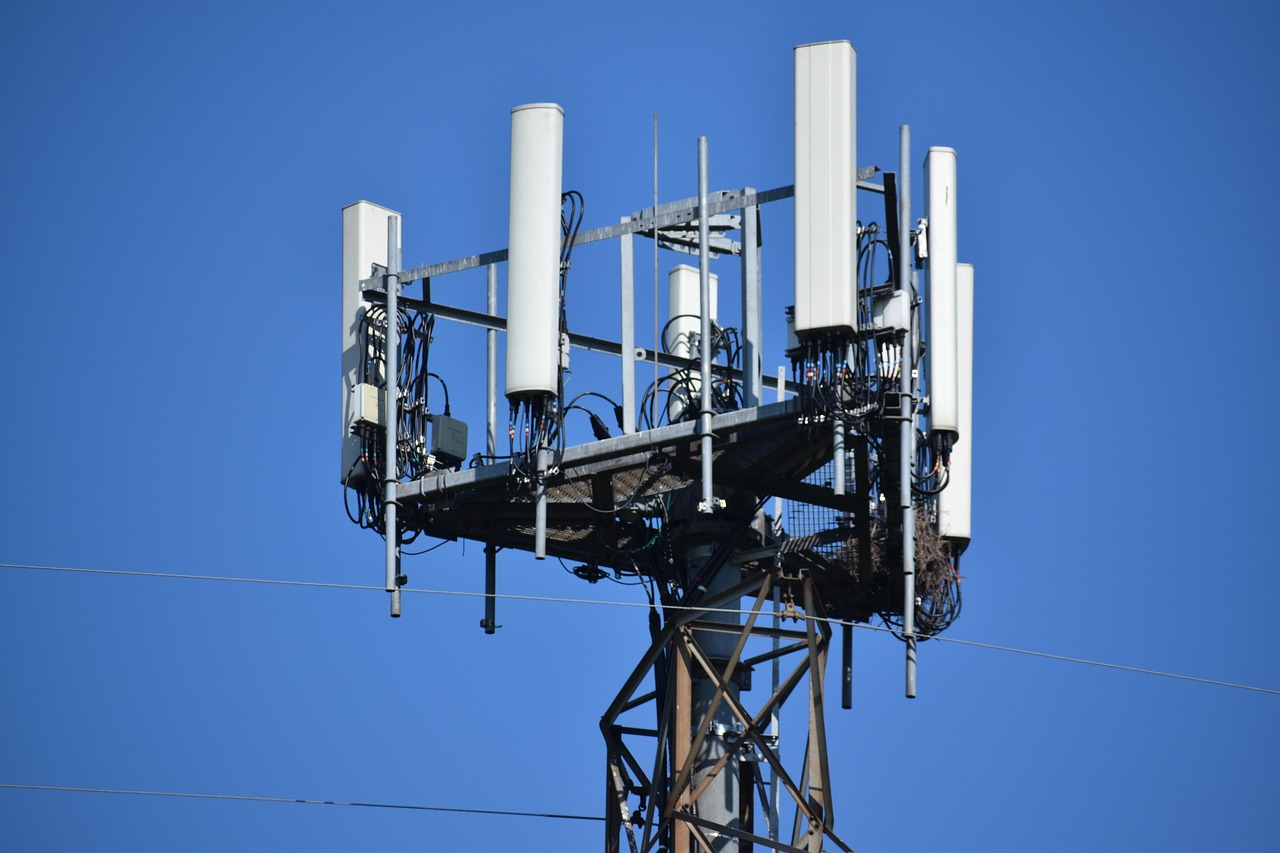
Deploying 5G requires significant infrastructure investment. The high-band spectrum that delivers fastest speeds has limited range, necessitating dense networks of small cells installed on streetlights, buildings, and utility poles. Cities must navigate regulatory challenges and aesthetic concerns while expanding coverage.
Backhaul connections linking cell sites to core networks need upgrades to handle increased traffic. Fiber optic cables become essential, as existing copper infrastructure can’t support the data volumes 5G generates. This infrastructure buildout represents a massive undertaking requiring coordination between carriers, municipalities, and property owners.
Power consumption poses another challenge. While individual devices become more efficient, network equipment requires substantial energy. Carriers invest in renewable energy and efficiency improvements to manage costs and environmental impact as traffic grows exponentially.
Security considerations become more complex with billions of connected devices. Each connection represents a potential vulnerability that requires protection. Network slicing, which creates virtual networks for different use cases, introduces new security paradigms requiring careful management.
🌍 Global Deployment and Digital Divide Concerns
5G rollout varies dramatically across regions. Urban centers in developed countries enjoy extensive coverage, while rural areas and developing nations lag significantly behind. This disparity raises concerns about widening digital divides between connected and disconnected populations.
Economic factors influence deployment speed. Building infrastructure costs billions, making business cases challenging in areas with low population density or limited purchasing power. Governments and international organizations debate strategies to ensure equitable access to next-generation connectivity.
Different countries adopt varying approaches to spectrum allocation and network deployment. Some prioritize nationwide coverage, while others focus on high-density urban areas first. These decisions shape how citizens experience technology and compete in the global economy.
Geopolitical considerations complicate international cooperation on 5G standards and equipment. Concerns about security, intellectual property, and economic competition influence which companies and technologies countries embrace, potentially fragmenting global standards.
🔒 Privacy and Security in a Hyperconnected World
With billions of devices continuously transmitting data, privacy concerns intensify. Smart home devices, wearables, and sensors collect intimate details about daily life. Questions arise about who accesses this information, how it’s used, and what protections exist against misuse.
Network architecture introduces new attack surfaces for malicious actors. While 5G includes improved security features, the sheer volume of connected devices creates more potential vulnerabilities. Cybersecurity becomes increasingly critical as critical infrastructure depends on wireless connectivity.
Data sovereignty issues emerge as information flows across borders seamlessly. Different jurisdictions maintain varying privacy regulations, creating compliance challenges for international services. Users struggle to understand who controls their data and what rights they maintain.
Authentication and encryption become more sophisticated to protect communications. Network operators implement advanced techniques to verify device identities and secure transmissions. However, security remains an ongoing challenge requiring constant vigilance and updates.
💡 Future Possibilities and 6G Development
Even as 5G deployment continues, researchers already explore 6G technologies expected around 2030. These next-generation networks promise even faster speeds, potentially reaching terabits per second, and latency measured in microseconds rather than milliseconds.
Artificial intelligence integration will likely define 6G networks. Self-optimizing systems could automatically adjust parameters for optimal performance, predict traffic patterns, and detect anomalies without human intervention. Machine learning algorithms might manage entire networks autonomously.
Holographic communication represents one ambitious possibility. Instead of video calls, participants could appear as three-dimensional projections in shared virtual spaces. This technology requires data transmission far beyond current capabilities but could redefine remote collaboration.
Wireless power transmission might become practical at scale, allowing devices to charge through network connections. Brain-computer interfaces could eventually connect directly to networks, though significant technical and ethical challenges must be addressed first.
🎯 Making the Most of 5G Technology Today
Consumers considering 5G devices should verify coverage in areas they frequent. While network maps provide guidance, real-world performance varies based on building materials, congestion, and weather conditions. Testing actual speeds helps set realistic expectations.
Businesses can explore use cases that leverage 5G’s unique capabilities rather than simply replacing existing 4G connections. Applications requiring low latency, high reliability, or massive device connections benefit most. Pilot projects help identify valuable opportunities before major investments.
Developers have opportunities to create applications impossible with previous technologies. Thinking beyond faster versions of existing apps to entirely new experiences can differentiate products and services. Edge computing combined with 5G enables responsive applications that feel instantaneous.
Understanding data plans becomes crucial as 5G’s speed makes consuming large amounts of data easy. Unlimited plans may include deprioritization after certain thresholds. Users should monitor consumption to avoid unexpected charges or performance limitations.
🌟 The Connected Future 5G Enables
5G represents more than technological advancement—it’s the foundation for a fundamentally different digital existence. As networks mature and coverage expands, capabilities we consider futuristic will become everyday experiences. The technology enables innovations we haven’t yet imagined, limited only by human creativity.
Industries will continue transforming as organizations discover novel applications. The combination of 5G, artificial intelligence, edge computing, and Internet of Things creates a technological ecosystem greater than the sum of its parts. These converging technologies will reshape how we work, play, and live.
Challenges remain, from infrastructure buildout to security concerns to ensuring equitable access. However, the potential benefits—improved healthcare, safer transportation, environmental sustainability, and economic opportunity—make addressing these challenges worthwhile. Collaboration between government, industry, and communities will determine how successfully we navigate this transition.
The 5G revolution has begun, and its impact will resonate for decades. Understanding this technology empowers individuals and organizations to make informed decisions and seize opportunities in our increasingly connected world. Whether you’re a consumer enjoying faster downloads or a business leader reimagining operations, 5G offers tools to create the future you envision. 🚀
