
Anúncios
Learning to play the accordion opens a world of musical expression, cultural richness, and creative possibilities that few instruments can match.


The accordion is an instrument that carries the soul of folk traditions, from French musettes to Italian tarantellas, from Argentinian tangos to Brazilian forró. Its unique sound evokes emotion, nostalgia, and celebration all at once. Whether you’re drawn to its melodic versatility or its rhythmic power, learning the accordion can be a deeply rewarding journey.
Many beginners feel intimidated by the accordion’s complexity—the buttons, the bellows, the coordination required between both hands. But with the right approach, patience, and practice, anyone can master this beautiful instrument. This guide will walk you through everything you need to know to start your accordion learning adventure. 🎶
Understanding the Accordion: Types and Components
Before you begin playing, it’s essential to understand what kind of accordion suits your musical goals. There are several types, each with distinct characteristics and uses.
The piano accordion features a piano-style keyboard on the right side, making it accessible for those familiar with piano layouts. The button accordion (also called chromatic button accordion) uses buttons instead of keys and is popular in European folk music. The diatonic accordion, common in folk traditions worldwide, produces different notes depending on whether the bellows are pushed or pulled.
Each accordion consists of three main components: the right-hand manual (keyboard or buttons), the left-hand bass system, and the bellows. The bellows act as the lungs of the instrument, controlling volume and expression. Mastering bellows technique is crucial for producing smooth, controlled sounds.
Choosing Your First Accordion 🎹
Selecting the right accordion as a beginner can feel overwhelming, but focusing on a few key factors will simplify your decision.
Consider starting with a smaller, lighter model. Full-size accordions can weigh between 20 to 30 pounds, which can be tiring for beginners during extended practice sessions. A 48-bass or 60-bass accordion offers enough range for learning without being too heavy.
Budget is another important consideration. New accordions can be expensive, often ranging from $500 to several thousand dollars. Used accordions from reputable sellers can be excellent starter options. Always inspect or have a professional check a used accordion for air leaks, sticky keys, or damaged reeds before purchasing.
The type of music you want to play should guide your choice. If you’re interested in classical or jazz, a piano accordion might be ideal. For traditional folk music like Irish, Cajun, or Tex-Mex, a diatonic button accordion could be more appropriate.
Proper Posture and Hand Position
Establishing correct posture from the beginning prevents bad habits and physical strain. Sit upright with your feet flat on the floor, or stand with balanced weight distribution. The accordion should rest comfortably on your left thigh if seated, secured with shoulder straps that distribute weight evenly.
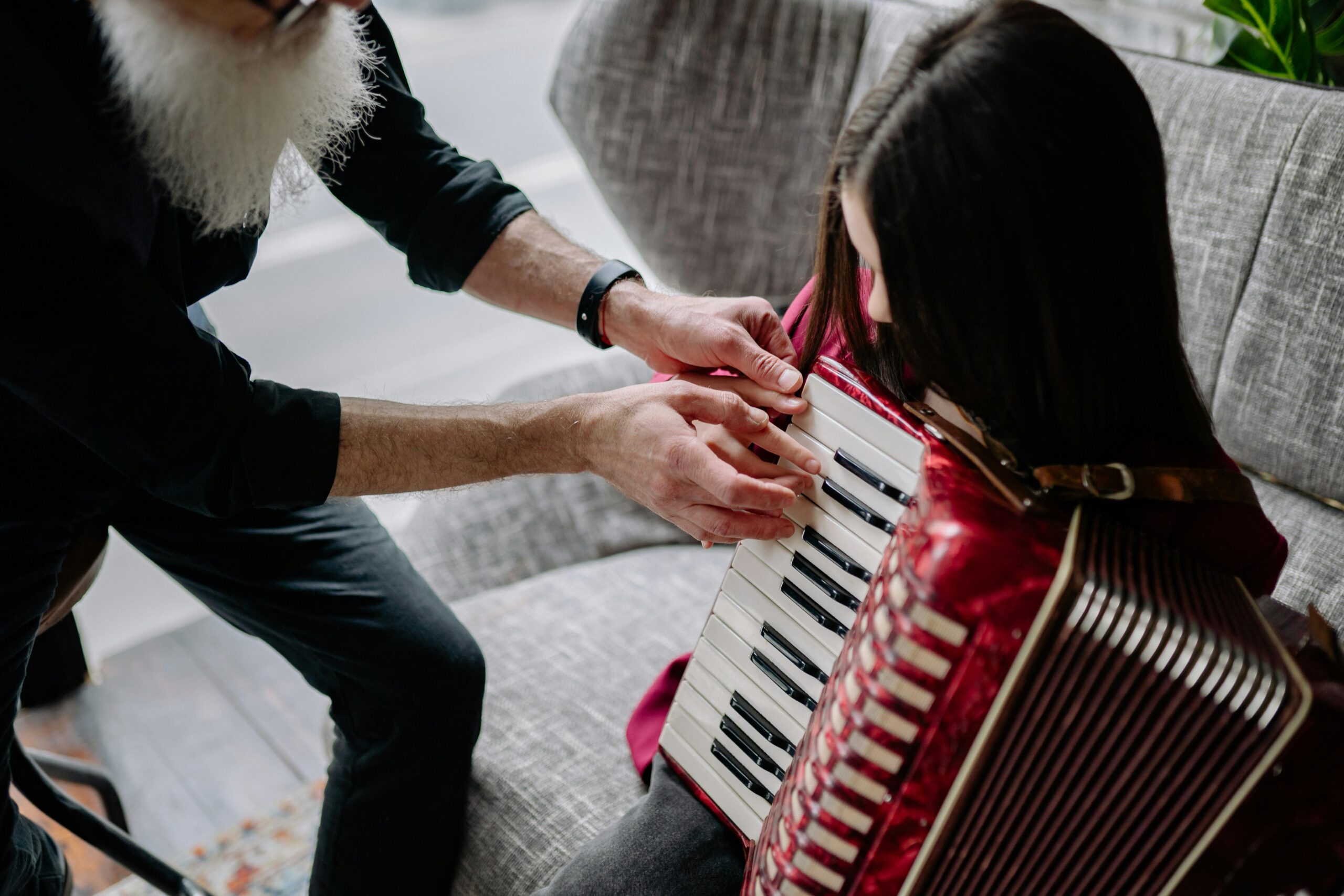
Your right hand should be relaxed, with fingers curved naturally over the keys or buttons. Avoid tensing your hand or wrist. The thumb typically rests behind the keyboard or on a thumb strap, providing support and stability.
The left hand has a more complex role, operating the bass and chord buttons while managing the bellows. Your left arm should move the bellows smoothly, using your whole arm rather than just your wrist. The left-hand fingers navigate the button system, which is typically arranged in rows representing bass notes and chord variations.

Mastering the Bellows Technique 🌬️
The bellows are what give the accordion its distinctive expressive quality. Unlike piano or guitar, where volume is determined by how hard you strike or pluck, the accordion’s volume and tone are controlled by bellows pressure and speed.
Begin by practicing opening and closing the bellows without playing any notes. Focus on smooth, even movements. Jerky bellows motion creates uneven sound and can disrupt your playing. Think of the bellows as breathing—natural, controlled, and fluid.
Practice bellows changes at different speeds. Slow changes create gentle, sustained tones, while quick changes produce sharper, more rhythmic sounds. Learning when to change bellows direction is crucial for musical phrasing. Ideally, bellows changes should occur at natural phrase breaks in the music.
A common beginner mistake is running out of bellows mid-phrase. Planning your bellows direction ahead of time ensures smooth musical flow. Mark your sheet music with bellows direction indicators (push or pull) until this becomes intuitive.
Learning the Right-Hand Keyboard
For piano accordion players, the right-hand keyboard follows the same layout as a piano, making it somewhat easier if you have piano experience. Start by familiarizing yourself with middle C and the basic scale.
Practice scales slowly and deliberately. The C major scale is typically the first one beginners learn, as it contains no sharps or flats. Play each note cleanly, ensuring smooth bellows pressure throughout.
Simple melodies help develop finger coordination and musical expression. Folk songs, children’s songs, and simple classical pieces provide excellent practice material. Songs like “Mary Had a Little Lamb,” “Twinkle Twinkle Little Star,” or “Ode to Joy” use limited note ranges and simple rhythms.
As you progress, introduce more complex scales, including minor scales and scales with sharps and flats. Practice exercises that involve finger crossings and position shifts to build dexterity and comfort across the entire keyboard.
Navigating the Left-Hand Bass System 🎵
The left-hand side of the accordion is often the most challenging for beginners. The Stradella bass system, used on most accordions, arranges buttons in rows representing different musical functions.
The bass buttons typically occupy two rows, providing fundamental bass notes. The remaining rows contain various chord types: major, minor, seventh, and diminished. The layout follows the circle of fifths, creating a logical pattern once you understand the system.
Start by locating the reference button—usually marked with a dimple or different texture. This button, typically the C bass note, helps you orient your hand without looking. From this reference point, you can navigate the entire bass system by feel.
Practice simple bass patterns using just the fundamental bass row. Once comfortable, add major chords, alternating between bass notes and chords in a “oom-pah” rhythm common in accordion music. This foundational pattern appears in countless songs across many genres.
Coordinating Both Hands Together
Combining right-hand melodies with left-hand accompaniment represents a significant milestone for accordion students. This coordination requires patience and systematic practice.
Begin with pieces where the left hand plays on specific beats while the right hand holds notes. Simple waltz patterns (bass on beat one, chord on beats two and three) paired with slow melodies help develop independence between hands.
Practice each hand separately until you can play them confidently without thinking. Then slowly combine them, starting at a much slower tempo than the final performance speed. Use a metronome to maintain steady rhythm.
As coordination improves, tackle more complex arrangements where both hands play more intricate, independent parts. Classical accordion literature offers excellent exercises for developing this skill, as does traditional folk music with characteristic rhythmic patterns.
Reading Accordion Sheet Music 📖
Accordion music notation differs slightly from piano music. The treble clef represents the right hand, just like piano music. However, the bass clef often uses a specialized notation system showing chord symbols or button numbers rather than traditional bass clef notation.
Some accordion music uses a two-staff system similar to piano music, while others use specialized accordion notation with chord symbols and bass button numbers. Familiarize yourself with both systems, as you’ll encounter each throughout your learning journey.
Bellows direction markings appear above the staff, indicating when to push or pull. Dynamic markings take on special importance for accordion, as they’re achieved primarily through bellows control rather than touch intensity.
Start with music specifically arranged for accordion at your skill level. Many method books provide progressive exercises and pieces designed to develop technique systematically. As you advance, you can adapt music from other instruments or learn from authentic folk music transcriptions.
Essential Practice Routines and Tips ⏰
Consistent, focused practice yields better results than sporadic marathon sessions. Even 20-30 minutes of daily practice produces significant progress over time.
Structure your practice sessions to include several components: warm-up exercises, scale practice, technical exercises, and repertoire work. Begin with simple warm-ups to loosen your fingers and establish proper posture and bellows control.
Set specific goals for each practice session. Rather than simply “practicing for 30 minutes,” aim to “master the first eight measures of this piece” or “play this scale pattern cleanly at 80 BPM.” Specific goals create a sense of accomplishment and track progress.
Record yourself regularly. Listening back to your playing reveals issues you might not notice while playing. It also provides motivation as you hear your improvement over weeks and months.
Take breaks during practice to avoid physical tension and mental fatigue. The accordion requires physical effort, and overworking can lead to strain or injury. If you feel pain or excessive tension, stop and rest.
Common Beginner Challenges and Solutions
Every accordion student encounters similar obstacles. Understanding these common challenges helps you address them effectively.
Air leaks: If your accordion loses air quickly or makes wheezing sounds, it likely has an air leak. This requires professional repair, as sealing leaks involves specialized knowledge and tools.
Uneven bellows control: Jerky or uncontrolled bellows motion creates choppy sound. Practice bellows exercises without playing notes, focusing solely on smooth, even movement in both directions.
Left-hand navigation: Getting lost in the bass system is common. Always return to the reference button to reorient yourself. With time, muscle memory develops, and navigation becomes intuitive.
Hand independence: Struggling to coordinate both hands is normal. Slow down, practice hands separately, and gradually combine them at reduced tempo. Patience is essential.
Timing and rhythm issues: Use a metronome religiously during practice. Start at slower tempos and gradually increase speed only when you can play cleanly and accurately.
Exploring Different Musical Styles 🎼
One of the accordion’s greatest strengths is its versatility across musical genres. Exploring different styles keeps learning exciting and expands your musical vocabulary.
Traditional folk music from various cultures provides rich accordion repertoire. French musette, Italian folk music, Irish traditional music, and Eastern European polkas each have distinctive styles and techniques. Learning these styles connects you with cultural traditions and develops stylistic awareness.
Classical accordion music showcases the instrument’s concert potential. Composers like Astor Piazzolla elevated the accordion (bandoneón) in tango music, while contemporary classical composers write sophisticated works for concert accordion.
Jazz and popular music offer exciting possibilities for accordion. The instrument’s ability to sustain notes and create both melody and harmony makes it suitable for jazz standards, pop arrangements, and even rock music.
Don’t limit yourself to one genre. Experimenting with different styles develops versatility and prevents practice from becoming monotonous. Each genre teaches different techniques and musical concepts.
Finding Learning Resources and Community
You don’t have to learn accordion alone. Numerous resources and supportive communities can accelerate your progress and enhance enjoyment.
Private instruction with an experienced accordion teacher provides personalized guidance, immediate feedback, and structured curriculum. If in-person lessons aren’t available in your area, many teachers offer online lessons via video call.
Online video tutorials and courses offer flexible learning at your own pace. YouTube hosts countless free accordion lessons covering everything from absolute beginner topics to advanced techniques. Subscription-based platforms provide structured courses with progressive skill development.
Accordion method books provide systematic instruction and repertoire. Popular methods include Palmer-Hughes, Hohner series, and various European method books. Choose books appropriate for your accordion type and musical interests.
Join accordion clubs, online forums, and social media groups. These communities offer support, advice, performance opportunities, and friendship with fellow accordion enthusiasts. Many cities have accordion clubs that meet regularly for workshops, jam sessions, and performances.
Maintaining Your Accordion
Proper maintenance keeps your accordion in optimal playing condition and extends its lifespan. Regular care prevents costly repairs and ensures consistent sound quality.
Store your accordion in its case when not in use, away from extreme temperatures and humidity. Temperature fluctuations can affect tuning and damage reeds. Keep the instrument in a climate-controlled environment whenever possible.
Clean the exterior gently with a soft cloth. Avoid harsh chemicals or excessive moisture. The keyboard and buttons can be wiped carefully with a slightly damp cloth, then dried immediately.
Have your accordion professionally serviced annually. A qualified technician will check for air leaks, clean internal components, and ensure everything functions properly. Address any issues promptly rather than letting small problems become major repairs.
Handle your accordion carefully to prevent damage. The instrument is delicate despite its robust appearance. Avoid dropping it, bumping it against objects, or exposing it to impacts that could damage reeds or internal mechanisms.
Setting Goals and Tracking Progress 📈
Establishing clear goals and monitoring your development keeps motivation high and provides direction for your practice efforts.
Set both short-term and long-term goals. Short-term goals might include learning a specific song, mastering a particular scale, or developing smoother bellows control. Long-term goals could involve performing publicly, joining an accordion ensemble, or achieving a certain skill level.
Keep a practice journal documenting what you work on, challenges encountered, and breakthroughs achieved. This record reveals progress that might not be obvious day-to-day and helps identify areas needing attention.
Celebrate milestones along your journey. Learning an instrument is challenging, and acknowledging achievements—no matter how small—maintains enthusiasm and commitment. Share your progress with supportive friends, family, or your accordion community.
Be patient with yourself. Progress isn’t always linear. Some concepts click immediately, while others require weeks or months of practice. Everyone learns at their own pace, and comparing yourself to others can be discouraging. Focus on your personal growth and enjoy the process.
Taking Your Skills to Performance Level 🎭
Once you’ve developed foundational skills, consider sharing your music through performance. Playing for others, even informally, enhances your musicianship and builds confidence.
Start with low-pressure situations: playing for family, friends, or at accordion club gatherings. These informal performances help you adapt to the different feeling of playing for an audience.
Prepare thoroughly for performances. Know your pieces so well that you can play them reliably even when nervous. Practice performing at home, visualizing an audience and dealing with potential distractions.
Manage performance anxiety through preparation, breathing techniques, and positive visualization. Remember that audiences are generally supportive and appreciate live music, minor mistakes and all.
Seek performance opportunities at open mics, community events, nursing homes, or local venues. Regular performances accelerate skill development and make playing more rewarding. The joy of sharing music with others is one of the greatest pleasures of learning an instrument.
Embracing the Lifelong Journey
Learning accordion is not a destination but an ongoing journey of discovery, creativity, and personal expression. Even accomplished players continue learning new techniques, styles, and repertoire throughout their lives.
Stay curious and open to new musical experiences. Attend accordion concerts, festivals, and workshops. Listen to great accordion players across different genres, studying their techniques and musical interpretations.
Challenge yourself regularly by learning pieces slightly beyond your current ability. This “productive struggle” drives skill development and prevents stagnation. Balance challenging material with pieces you can play comfortably and enjoy.
Remember why you started learning accordion. Whether drawn by a specific musical style, cultural connection, or simply the instrument’s unique voice, reconnecting with your original motivation sustains long-term commitment.
The accordion offers a lifetime of musical enjoyment, cultural exploration, and personal satisfaction. With dedication, patience, and joy in the learning process, you’ll develop skills that bring music into your life and the lives of others. Your accordion journey begins with a single note and unfolds into a rich, rewarding musical adventure. 🎶✨
