
Anúncios
Learning to play the accordion opens up a world of musical expression, cultural connection, and creative fulfillment that few instruments can match.


The accordion is a fascinating instrument that combines melody and harmony in one compact, portable package. Whether you’re drawn to folk music, classical compositions, jazz improvisations, or contemporary styles, the accordion offers versatility that adapts to nearly every musical genre.
Many beginners feel intimidated by the accordion’s unique design and dual-hand coordination requirements. However, with structured practice, patience, and the right guidance, anyone can master this beautiful instrument and enjoy the journey of musical discovery it provides.
🎵 Understanding the Accordion’s Anatomy
Before diving into playing techniques, familiarizing yourself with the accordion’s components helps you understand how the instrument produces sound. The accordion consists of three main sections: the right-hand keyboard or buttons, the left-hand bass system, and the bellows connecting them.
The right hand typically plays melodies on a piano-style keyboard or button arrangement. The left hand operates bass buttons that produce chords and bass notes. The bellows act as the accordion’s lungs, controlling air flow and dynamics through expansion and compression movements.
Quality accordions feature responsive keys, smooth bellows action, and well-tuned reeds that vibrate when air passes through them. Understanding these fundamental components helps you appreciate how your physical movements translate into musical sound.
🎹 Choosing Your First Accordion
Selecting the right accordion significantly impacts your learning experience. Beginners should consider several factors including size, weight, button configuration, and budget constraints when making this important decision.
Piano accordions feature a familiar keyboard layout that appeals to those with piano background. Button accordions, common in folk traditions, offer a more compact design and different finger patterns. Neither is inherently better—your choice depends on musical preferences and physical comfort.
Weight matters considerably since you’ll be holding the instrument while playing. Lighter models reduce physical strain during practice sessions, while fuller-sized accordions typically offer richer tonal qualities and extended range.
Consider renting before purchasing if you’re uncertain about long-term commitment. Many music stores offer rental programs that allow you to test different models before investing in your own instrument.
🪑 Proper Posture and Holding Techniques
Establishing correct posture from the beginning prevents physical discomfort and technical limitations later. Sit upright on a firm chair with your feet flat on the floor, positioned about shoulder-width apart for stability.
The accordion rests on your left thigh while shoulder straps distribute weight evenly across your back. Adjust straps so the instrument sits comfortably against your chest without slouching or leaning backward to compensate for weight.
Your right arm should move freely across the keyboard without tension. The left hand needs flexibility to navigate bass buttons while simultaneously controlling bellows direction. Relaxed shoulders and natural breathing rhythm contribute to fluid playing technique.
Take frequent breaks during practice sessions to avoid muscle fatigue. Building endurance happens gradually as your body adapts to the instrument’s physical demands.
🎼 Understanding Bellows Control
The bellows represent the accordion’s most distinctive feature and require dedicated practice to master. Smooth, controlled bellows movement creates consistent tone quality and dynamic expression throughout your playing.
Begin by practicing opening and closing the bellows without pressing any keys. Focus on steady, even motion that maintains consistent air pressure. Avoid jerky movements or sudden direction changes that create unwanted accents.
Bellows direction changes should coincide with natural musical phrases, similar to breathing points in vocal music. Planning these changes in advance helps maintain musical flow without awkward interruptions.

Dynamic control comes through varying bellows pressure and speed. Gentle, slow movements produce soft passages while faster, more forceful action creates louder volumes. This technique allows expressive playing that responds to musical emotion.
✋ Right Hand Melody Fundamentals
The right hand carries melodic responsibility, making finger technique and coordination essential skills. Start with simple five-finger exercises that develop independence and strength in each digit.
Proper finger curvature keeps your hand relaxed while allowing precise key strikes. Imagine holding a small ball in your palm—this natural curve prevents tension and promotes agility across the keyboard.
Practice scales systematically, beginning with C major and gradually introducing sharps and flats. Scales build muscle memory for common finger patterns that appear repeatedly in actual music.
Focus on even tone production where each note sounds with equal clarity and volume. Listen critically to your playing, identifying weak fingers that need additional strengthening exercises.
🎶 Left Hand Bass and Chord System
The left-hand bass system initially appears complex with its rows of buttons arranged in a specific pattern. However, this standardized layout becomes intuitive with consistent practice and understanding of its logical organization.
Most accordions use the Stradella bass system featuring six rows: two rows of bass notes and four rows of chord buttons. The bass rows produce fundamental and counter bass notes, while chord rows provide major, minor, seventh, and diminished harmonies.
Begin by locating the reference button, usually marked with a dimple or distinctive feel. This button serves as your tactile anchor for navigating the bass board without looking.
Practice simple bass-chord patterns like alternating bass notes with major chords. This fundamental accompaniment style appears across countless musical genres and builds coordination between both hands.
📚 Learning to Read Accordion Music
Reading music notation accelerates learning and opens access to vast repertoire collections. Accordion music typically appears on a grand staff showing right-hand treble clef and left-hand bass clef simultaneously.
Chord symbols above the staff indicate left-hand bass patterns, showing which buttons to press. These symbols use letters (C, F, G) with modifiers (m for minor, 7 for seventh chords) that correspond directly to bass button positions.
Start with simplified arrangements that isolate one hand at a time. Master the melody before adding bass accompaniment, then gradually combine both hands at slower tempos.
Rhythm reading proves equally important as pitch recognition. Count aloud while playing, subdividing beats to ensure accurate timing. Consistent rhythm creates musical cohesion that sounds professional even at beginner skill levels.
🎯 Essential Practice Strategies
Effective practice transforms raw repetition into meaningful skill development. Quality matters more than quantity—focused 30-minute sessions often yield better results than unfocused hour-long attempts.
Establish specific goals for each practice session. Perhaps you’re mastering a challenging measure, improving bellows smoothness, or increasing tempo on a familiar piece. Clear objectives provide direction and measurable progress.
Slow practice remains the foundation of technical mastery. Playing difficult passages at reduced speeds allows your brain to encode correct movements before attempting performance tempo.
Divide complex pieces into manageable sections. Master small segments individually before connecting them into complete musical phrases. This methodical approach prevents overwhelming frustration and builds confidence progressively.
🌟 Building Your Repertoire
Selecting appropriate music maintains motivation while developing skills systematically. Beginner method books provide graded exercises that introduce techniques incrementally with supportive guidance.
Folk tunes offer accessible melodies with straightforward chord progressions. Traditional songs from various cultures showcase the accordion’s versatility while connecting you to rich musical heritage.
Don’t limit yourself to one genre. Exploring different musical styles expands technical abilities and keeps practice sessions fresh and engaging. Classical minuets, jazz standards, pop arrangements, and ethnic dances each offer unique learning opportunities.
Memorizing pieces strengthens musical understanding beyond note reading. Performing from memory allows expressive freedom and deeper connection with the music you’re creating.
🎤 Developing Your Musical Ear
Ear training complements visual reading by developing intuitive musical understanding. Learning to play melodies by ear enhances improvisation skills and makes you a more versatile musician.
Start by picking out simple, familiar tunes. Children’s songs and folk melodies with limited note ranges provide excellent beginning material for developing aural skills.
Sing or hum melodies before attempting them on the accordion. Internalizing the tune mentally helps your fingers find correct notes more intuitively.
Identify chord progressions by ear, recognizing common patterns like I-IV-V sequences. Understanding harmonic relationships improves left-hand choices and accompaniment creativity.
🔧 Basic Accordion Maintenance
Proper care extends your instrument’s lifespan and ensures consistent performance quality. Accordions contain delicate reeds and mechanisms requiring gentle handling and appropriate storage conditions.
Store your accordion in its case when not playing, protecting it from dust, humidity extremes, and temperature fluctuations. Avoid leaving it in cars or near heating vents where conditions can damage sensitive components.
Clean the exterior regularly with a soft, dry cloth. Piano keys can be wiped with slightly dampened cloths, but never allow moisture near bellows or internal mechanisms.
Schedule professional tuning and maintenance annually or whenever you notice performance issues. Qualified accordion technicians can address problems before they become serious, costly repairs.
👥 Finding Teachers and Learning Resources
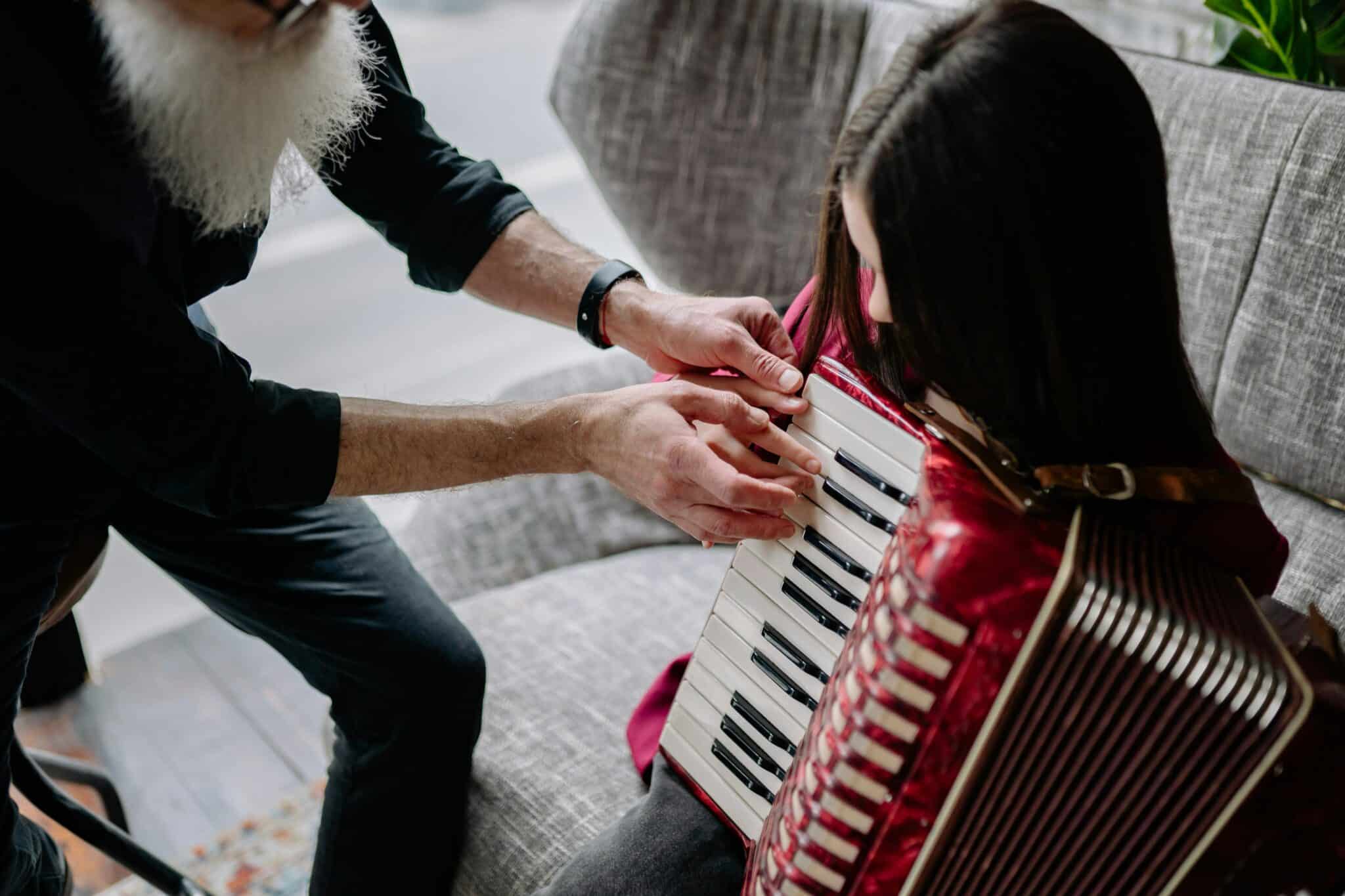
While self-teaching is possible, working with an experienced instructor accelerates progress and prevents bad habits. A qualified teacher provides personalized feedback, technical corrections, and motivational support.
Search for local accordion teachers through music stores, community centers, and online directories. Many instructors offer both in-person and virtual lessons, expanding access regardless of geographical location.
Online platforms provide supplementary learning materials including video tutorials, interactive exercises, and community forums. These resources complement formal instruction and offer flexible practice support.
Join accordion clubs or associations to connect with fellow enthusiasts. Group settings provide performance opportunities, social motivation, and collective knowledge sharing that enriches your musical journey.
🎭 Overcoming Common Challenges
Every accordion student encounters obstacles during their learning journey. Coordination between hands, bellows control, and bass navigation frequently present initial difficulties that improve with persistent practice.
Physical fatigue affects beginners as their bodies adapt to holding and playing the instrument. Gradual conditioning through consistent practice builds endurance without risking injury from overexertion.
Mental frustration arises when progress feels slow or plateaus occur. Remember that skill development isn’t linear—periods of apparent stagnation often precede breakthrough moments.
Celebrate small victories along the way. Successfully playing your first complete song, mastering a tricky chord transition, or performing for friends represents meaningful achievements worth acknowledging.
🚀 Advancing Your Accordion Skills
As fundamental techniques become comfortable, intermediate concepts expand your musical possibilities. Complex rhythms, extended keyboard range, and sophisticated chord voicings add depth to your playing.
Explore ornamentations like trills, grace notes, and vibrato effects that add character and expression to melodies. These embellishments transform simple tunes into engaging, professional-sounding performances.
Study different bellows techniques including bellows shakes, staccato articulations, and dynamic swells. Mastering these advanced controls dramatically increases your expressive palette.
Consider learning improvisation fundamentals if you’re interested in jazz or contemporary styles. Understanding scales, chord tones, and rhythmic variation empowers spontaneous musical creation.
🌍 Exploring Musical Traditions
The accordion holds prominent positions in numerous cultural traditions worldwide. Exploring these diverse styles broadens your musical horizons and deepens appreciation for the instrument’s versatility.
French musette brings romantic, nostalgic flavors through distinctive tuning and rhythmic patterns. Italian folk music features energetic tarantellas and expressive cantabile melodies that showcase the accordion’s singing qualities.
Polka and waltz traditions from Central Europe emphasize rhythmic precision and cheerful melodies perfect for dance accompaniment. Cajun and zydeco styles from Louisiana blend French influences with blues and rhythm-driven grooves.
Tango music features the bandoneón, a button accordion variety producing hauntingly beautiful sounds synonymous with Argentine passion. Each tradition offers unique technical approaches and stylistic conventions worth exploring.
💡 Staying Motivated on Your Musical Journey
Long-term success requires sustained motivation through inevitable challenges and plateaus. Setting progressive goals keeps you moving forward while maintaining enjoyment in the learning process.
Record yourself regularly to track improvement objectively. Listening back reveals progress that might not be apparent during daily practice sessions.
Perform for others whenever possible, even informal living room concerts for family. Sharing your music creates accountability and transforms practice into purposeful preparation.
Remember why you started learning accordion. Whether driven by cultural connection, musical expression, or personal challenge, reconnecting with your original motivation renews commitment during difficult periods.
The accordion journey offers endless discovery, from first tentative notes to confident performances that move audiences. Every practice session brings you closer to the musician you aspire to become, making the effort worthwhile.
