
Anúncios
5G technology is transforming how we connect, communicate, and experience the digital world, offering unprecedented speed and reliability for users worldwide.


The fifth generation of wireless technology represents more than just an incremental upgrade from 4G. It’s a fundamental shift in how devices communicate with each other and with the cloud. From smartphones to smart cities, 5G networks are laying the foundation for innovations we’ve only dreamed about until now.
As rollout continues across continents, understanding what 5G truly offers becomes essential for consumers, businesses, and tech enthusiasts alike. This technology promises to reshape industries, enable new experiences, and unlock possibilities that were previously constrained by bandwidth limitations and latency issues.
📡 What Makes 5G Different from Previous Generations
The evolution from 1G to 5G has been remarkable. While 1G brought us basic voice calls and 4G enabled mobile internet as we know it, 5G takes connectivity to an entirely new dimension. The core differences lie in three critical areas: speed, latency, and capacity.
Speed improvements are perhaps the most talked-about feature. Where 4G networks typically deliver download speeds between 20-50 Mbps, 5G can theoretically reach speeds up to 10 Gbps. In practical terms, this means downloading a full HD movie in seconds rather than minutes. But speed is just the beginning of what sets this technology apart.
Latency, or the delay before data transfer begins, drops dramatically with 5G. Traditional 4G networks have latency around 50 milliseconds, while 5G can achieve as low as 1 millisecond. This near-instantaneous response time is crucial for applications requiring real-time interaction, such as autonomous vehicles, remote surgery, and augmented reality experiences.
Network capacity represents another significant leap forward. 5G can support up to one million devices per square kilometer, compared to about 100,000 for 4G. This massive increase enables the true Internet of Things (IoT) ecosystem, where countless sensors, appliances, and devices communicate simultaneously without congestion.
🚀 The Technology Behind 5G Networks
Understanding how 5G achieves these impressive capabilities requires looking at the underlying technology. The network operates on three different spectrum bands, each serving specific purposes and offering unique advantages.
Low-band spectrum provides wide coverage similar to 4G but with moderately improved speeds. Mid-band spectrum offers a balance between coverage and performance, delivering significantly faster speeds while maintaining reasonable range. High-band spectrum, often called millimeter wave (mmWave), provides the fastest speeds but with limited range and penetration capabilities.
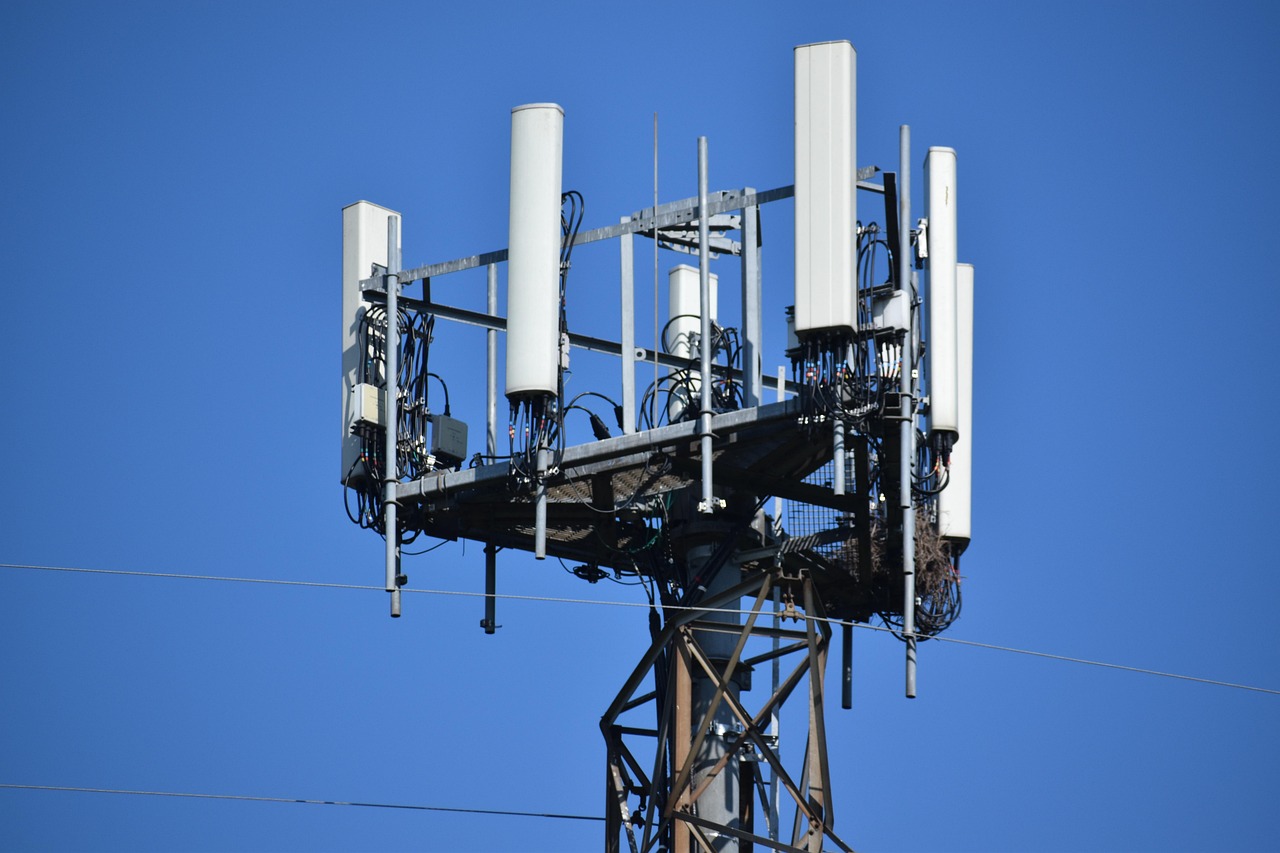
Massive MIMO (Multiple Input Multiple Output) technology represents another crucial innovation. By using dozens or even hundreds of antennas at cell towers, 5G networks can serve multiple users simultaneously without degrading performance. This beamforming capability directs signals precisely to individual devices rather than broadcasting in all directions.
Network slicing allows operators to create multiple virtual networks within a single physical infrastructure. Each slice can be optimized for specific use cases, whether that’s ultra-reliable communication for emergency services, enhanced mobile broadband for consumers, or massive machine-type communications for IoT devices.
🌐 Real-World Applications Transforming Industries
The healthcare sector stands to benefit enormously from 5G deployment. Remote surgery becomes feasible when surgeons can operate robotic instruments with zero perceptible lag. Telemedicine consultations improve dramatically with high-definition video that doesn’t freeze or buffer. Wearable health monitors can transmit real-time data continuously, enabling proactive care and early intervention.
Manufacturing is experiencing a revolution through smart factories powered by 5G. Machines communicate with each other instantly, predicting maintenance needs before breakdowns occur. Augmented reality glasses guide workers through complex assembly processes with overlaid instructions. Quality control systems analyze products in real-time, catching defects immediately rather than discovering them downstream.
Entertainment and media consumption are being redefined by 5G capabilities. Cloud gaming services allow playing graphics-intensive games on any device without powerful local hardware. Virtual reality experiences become truly immersive without the motion sickness caused by latency. Live streaming reaches new levels of quality, with 4K and 8K video becoming standard rather than aspirational.

🏙️ Smart Cities and Urban Development
Urban planning is being reimagined with 5G infrastructure at its core. Smart traffic management systems analyze vehicle flow in real-time, adjusting signal timing to reduce congestion and emissions. Connected streetlights dim or brighten based on pedestrian presence, saving energy while maintaining safety. Emergency services receive instant notifications about accidents or incidents, with optimal routing calculated immediately.
Public transportation benefits from seamless connectivity throughout the network. Passengers enjoy uninterrupted high-speed internet even while moving at high speeds through tunnels. Predictive maintenance systems monitor train and bus components continuously, preventing breakdowns and improving reliability. Real-time passenger counting optimizes scheduling based on actual demand patterns.
Environmental monitoring reaches unprecedented sophistication with dense sensor networks enabled by 5G. Air quality measurements occur at hundreds of points across a city, providing granular data for public health decisions. Water systems detect leaks immediately rather than losing resources for days or weeks. Waste management trucks optimize routes based on actual fill levels rather than predetermined schedules.
🔒 Security and Privacy Considerations
With greater connectivity comes increased security responsibility. 5G networks incorporate security features from the ground up, including enhanced encryption and authentication protocols. However, the expanded attack surface created by billions of connected devices presents new challenges that require ongoing vigilance and innovation.
Network slicing introduces both opportunities and risks for security. Isolating critical infrastructure onto dedicated network slices protects essential services from general consumer traffic. However, ensuring proper isolation between slices and preventing unauthorized access requires sophisticated security architectures and continuous monitoring.
Privacy concerns arise from the sheer volume of data generated by 5G-connected devices. Location tracking becomes more precise, usage patterns more detailed, and behavioral insights more revealing. Regulatory frameworks like GDPR and emerging legislation attempt to balance innovation with individual privacy rights, but the conversation continues to evolve as technology advances.
🌍 Global Rollout and Infrastructure Challenges
The deployment of 5G networks varies dramatically across regions. South Korea and China lead in coverage and adoption, with extensive urban deployments and rapidly growing user bases. European countries progress steadily but face regulatory complexities and coordination challenges across borders. The United States sees fragmented deployment, with coverage varying significantly between carriers and regions.
Developing nations face unique challenges in 5G adoption. The infrastructure investment required is substantial, and many areas still lack comprehensive 4G coverage. However, some countries view 5G as an opportunity to leapfrog older technologies, potentially deploying next-generation networks without being constrained by legacy infrastructure.
The cost of building 5G networks represents a significant barrier. Operators must install many more cell sites due to the physics of higher frequency signals, particularly for millimeter wave deployments. Small cells, distributed antenna systems, and fiber backhaul all require substantial capital expenditure. Balancing investment with revenue generation remains a critical challenge for telecommunications companies worldwide.
💡 Consumer Benefits and Everyday Impact
For everyday users, 5G brings noticeable improvements to familiar activities. Video calls become crystal clear without compression artifacts or frustrating delays. Social media uploads happen instantly, whether sharing photos or posting videos. Mobile hotspots become genuine alternatives to home broadband, particularly in areas where fiber isn’t available.
Gaming experiences improve dramatically on 5G networks. Competitive online gaming benefits from reduced latency, giving players more responsive controls and fairer competition. Cloud gaming services eliminate the need for expensive gaming hardware, streaming AAA titles directly to smartphones, tablets, or lightweight laptops. Augmented reality games like Pokémon GO reach new levels of sophistication with real-time multiplayer interaction and complex virtual environments overlaid on the physical world.
Professional applications expand mobile work capabilities significantly. Video editors can upload and download massive project files quickly from any location. Architects and engineers share detailed 3D models and collaborate in real-time regardless of physical location. Remote workers enjoy video conferencing quality that rivals in-person meetings, with multiple high-definition streams flowing smoothly simultaneously.
🚗 Autonomous Vehicles and Transportation Revolution
Self-driving cars rely heavily on 5G connectivity to achieve their full potential. Vehicle-to-vehicle (V2V) communication allows cars to share information about road conditions, hazards, and intentions in real-time. Vehicle-to-infrastructure (V2I) communication enables cars to receive information from traffic signals, road sensors, and centralized management systems. The ultra-low latency of 5G makes split-second decisions possible, critical for safety in dynamic traffic environments.
Fleet management for commercial transportation benefits enormously from 5G capabilities. Logistics companies track vehicles with precision, optimize routes based on real-time traffic and weather data, and monitor driver behavior for safety and efficiency. Predictive maintenance systems analyze vehicle telemetry continuously, scheduling service before breakdowns occur and minimizing downtime.
Public transit systems become more responsive and efficient with 5G integration. Buses and trains communicate their exact positions constantly, allowing dynamic scheduling adjustments based on actual conditions rather than static timetables. Passengers receive accurate real-time information about arrivals, delays, and alternative routes. Integration with personal devices provides seamless journey planning across multiple transport modes.
🎓 Education and Remote Learning Transformation
Educational institutions are discovering new possibilities through 5G connectivity. Virtual reality field trips transport students to historical sites, inside the human body, or to distant planets without leaving the classroom. Laboratory experiments become accessible remotely through robotic equipment controlled in real-time, democratizing access to expensive scientific instruments. Collaborative learning reaches new heights with multiple students interacting within shared virtual environments.
Remote education quality improves substantially with 5G bandwidth and reliability. High-definition video streams from multiple angles provide immersive lecture experiences. Interactive whiteboards respond instantly to input from both instructors and students. Hybrid learning models blend in-person and remote participants seamlessly, ensuring all students receive equivalent educational experiences regardless of physical location.
⚡ Energy Efficiency and Environmental Impact
Despite handling vastly more data, 5G networks are designed to be more energy-efficient per bit transmitted than previous generations. Advanced power management techniques allow network components to sleep when not needed, waking instantly when traffic arrives. Beamforming directs energy precisely where needed rather than broadcasting wastefully in all directions. These efficiencies help offset the increased energy consumption from handling greater traffic volumes.
Environmental monitoring capabilities enabled by 5G contribute positively to sustainability efforts. Precision agriculture uses sensors throughout fields to optimize water usage, reduce pesticide application, and maximize yields while minimizing environmental impact. Wildlife tracking systems monitor endangered species with minimal interference. Climate research benefits from dense sensor networks providing detailed environmental data across vast geographic areas.
🔮 The Future Beyond 5G
Even as 5G deployment continues, researchers are already exploring 6G technologies expected to emerge around 2030. Theoretical speeds could reach 1 terabit per second, with latency dropping below one millisecond. Artificial intelligence will be deeply integrated into network management, optimizing performance continuously and automatically. Satellite integration will provide truly global coverage, eliminating connectivity gaps even in the most remote locations.
The convergence of 5G with other emerging technologies creates exciting possibilities. Artificial intelligence and machine learning algorithms process the massive data streams generated by connected devices, extracting insights and enabling intelligent automation. Blockchain technology provides secure, decentralized frameworks for device authentication and data integrity. Quantum computing promises to solve complex optimization problems that could make networks even more efficient and capable.
As 5G networks mature and coverage expands, adoption will accelerate across all sectors. The technology will become invisible infrastructure, taken for granted like electricity or running water. Applications we can barely imagine today will emerge, enabled by capabilities we’re only beginning to explore. The transformation has begun, and the pace of change will only accelerate as more devices, more users, and more innovations leverage this powerful connectivity platform.
🎯 Making the Most of 5G Today
For consumers ready to experience 5G, several steps can help maximize the benefits. Investing in a 5G-capable device is the first requirement, with options now available across all price ranges. Checking coverage maps before subscribing ensures service availability in frequently visited locations. Understanding which spectrum bands your carrier uses helps set realistic expectations for speeds and coverage.
Businesses exploring 5G adoption should start with clear use cases aligned to specific operational needs. Pilot projects in controlled environments help demonstrate value and identify challenges before full-scale deployment. Partnering with carriers and technology vendors provides access to expertise and support during implementation. Building internal capabilities ensures teams can leverage new possibilities as they emerge.
Staying informed about 5G developments helps everyone make better decisions about adoption and usage. Technology evolves rapidly, with new capabilities, devices, and applications appearing regularly. Community forums, technology publications, and carrier announcements provide valuable information about network improvements and emerging opportunities. Testing network performance with specialized apps helps understand actual speeds and latency in your specific locations and use cases.
