
Anúncios
Learning to play the accordion opens a world of musical expression, cultural richness, and creative possibilities that few instruments can match.


The accordion has captivated audiences for centuries, weaving its distinctive sound through folk traditions, classical compositions, and contemporary music genres. Whether you’re drawn to French musette, Italian tarantella, or American Cajun music, this versatile instrument offers endless opportunities for musical growth.
Starting your accordion journey might seem daunting at first, but with proper guidance, patience, and consistent practice, anyone can master this beautiful instrument. The combination of melody, harmony, and rhythm in a single portable package makes the accordion uniquely rewarding for musicians of all ages.
🎵 Understanding the Accordion: Types and Components
Before diving into playing techniques, familiarizing yourself with the accordion’s anatomy and variations is essential. The accordion family includes several distinct types, each with unique characteristics suited to different musical styles.
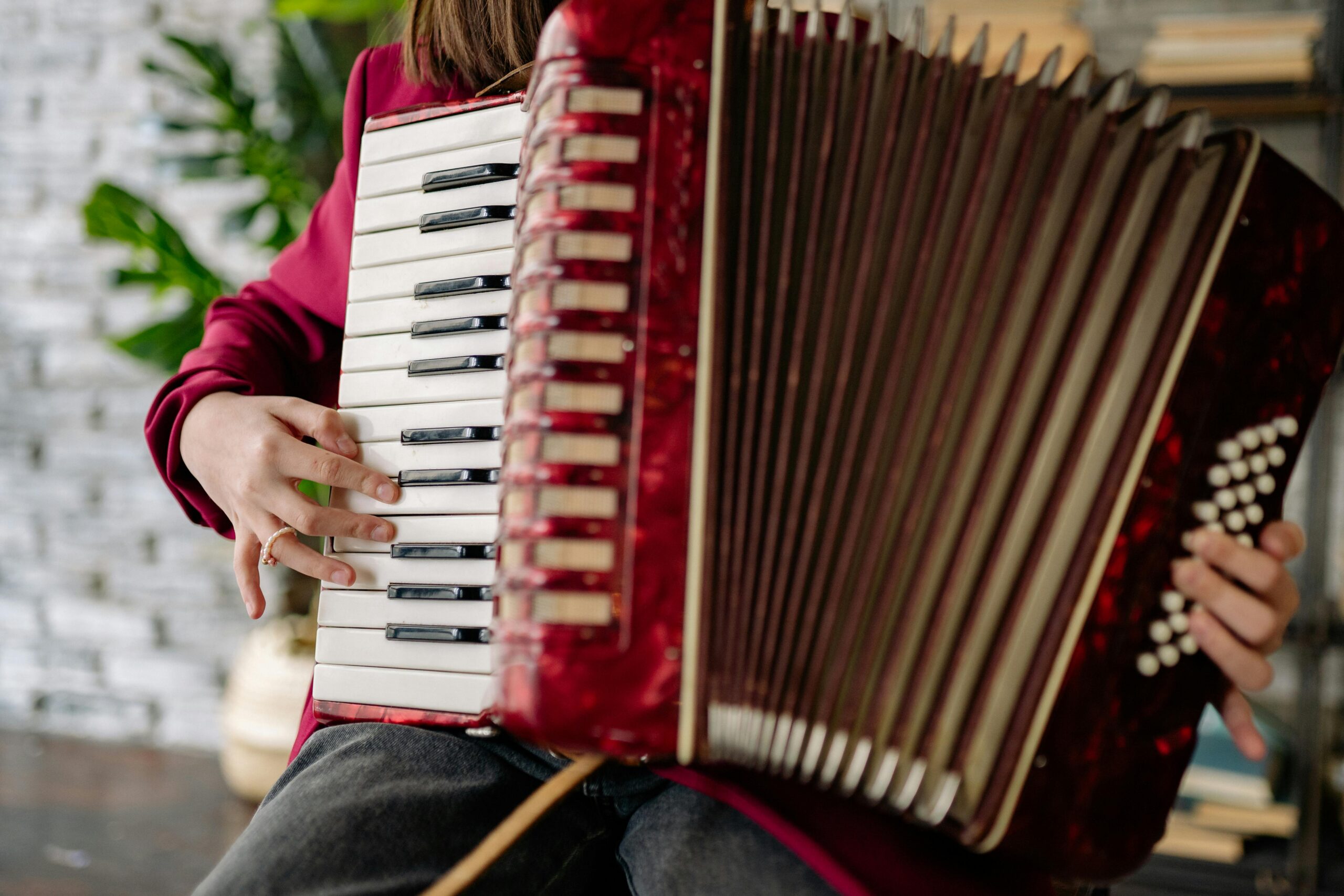
The piano accordion features a keyboard similar to a piano on the right side, making it intuitive for those with piano experience. The button accordion, alternatively, uses buttons arranged in rows, offering a more compact design and different fingering patterns. Diatonic accordions are popular in folk music, while chromatic models provide access to all musical notes.
Key components include the bellows, which you manipulate to create airflow and dynamic expression. The right-hand keyboard or buttons produce melody, while the left-hand bass buttons provide accompaniment with bass notes and chord combinations. Understanding how these elements work together forms the foundation of accordion mastery.
🎼 Choosing Your First Accordion
Selecting the right accordion significantly impacts your learning experience. Beginners often wonder whether to start with a full-size instrument or something more manageable.
Consider starting with a 48 or 72-bass accordion rather than a full 120-bass model. Smaller instruments are lighter, more affordable, and easier to handle while learning fundamental techniques. The weight distribution becomes important during extended practice sessions, so trying different models before purchasing is highly recommended.
Quality matters more than size. A well-maintained used accordion from a reputable brand often surpasses a new budget model in sound quality and responsiveness. Check for air leaks, sticky keys, and overall condition. Many music stores offer rental programs, allowing you to test different instruments before committing to a purchase.
💡 New vs. Used Instruments
Budget considerations play a significant role in your decision. New student accordions typically start around $500-$1000, while professional models can exceed $5000. Used accordions offer excellent value if properly inspected by a knowledgeable technician.
Look for brands like Hohner, Roland, Scandalli, or Bugari when shopping for quality instruments. Each manufacturer brings different tonal characteristics and build quality to their products. Reading reviews and consulting with accordion teachers provides valuable insights into which models suit your musical goals.
✋ Proper Posture and Holding Technique
Developing correct posture from the beginning prevents physical strain and enables better musical expression. The accordion’s weight requires balanced distribution between your body and the instrument’s straps.
Sit upright with both feet flat on the floor, or stand with your weight evenly distributed. Adjust the shoulder straps so the accordion sits comfortably against your chest without slouching. The right strap should be slightly tighter than the left to counterbalance the keyboard weight.
Your left hand supports the instrument’s weight through the bass strap while playing accompaniment. The right hand remains free to move across the keyboard or buttons without bearing weight. This balance allows fluid movement and prevents fatigue during practice sessions.
🎯 Hand Position Fundamentals
Proper hand positioning ensures efficiency and prevents repetitive strain injuries. Keep your wrists straight and relaxed, with fingers curved naturally as if holding a small ball. Avoid excessive tension in your shoulders, arms, or hands.
The right-hand thumb typically rests behind the keyboard, providing stability without playing notes. Fingers remain close to the keys, minimizing unnecessary movement. The left hand operates differently, with the thumb through the bass strap and fingers reaching for bass buttons and chord combinations.

🎹 Mastering Bellows Control
Bellows technique separates amateur accordion players from accomplished musicians. The bellows function as your breath, controlling dynamics, phrasing, and musical expression. Learning to manipulate air pressure smoothly transforms simple melodies into emotional performances.
Begin with simple exercises opening and closing the bellows while playing a single note. Focus on maintaining consistent volume throughout the bellows stroke. Avoid jerky movements or sudden pressure changes that create unwanted accents.
Practice changing bellows direction smoothly between phrases, similar to a singer taking breaths. The transition point should be inaudible to listeners. As you advance, incorporate crescendos and diminuendos by gradually increasing or decreasing bellows pressure.
💨 Bellows Shake and Advanced Techniques
The bellows shake adds vibrato and emotional depth to sustained notes. Execute this by making small, rapid push-pull movements while holding a note. This technique appears frequently in tango, folk music, and expressive ballads.
Experimenting with bellows speed and pressure creates different musical effects. Quick, short strokes produce staccato articulation, while long, smooth strokes create legato passages. Mastering these variations expands your expressive palette significantly.
📚 Learning to Read Accordion Music
Reading accordion sheet music involves understanding both treble and bass clefs simultaneously. The right-hand melody appears in treble clef, while the left-hand accompaniment uses bass clef with specific chord symbols.
Accordion notation includes additional markings indicating bellows direction. An arrow pointing right suggests opening the bellows (pulling), while a left-pointing arrow indicates closing (pushing). These markings help you plan phrasing and avoid awkward bellows reversals.
Start with simple melodies using only the right hand before adding left-hand accompaniment. Children’s songs, folk melodies, and simplified classical pieces provide excellent beginner material. Gradually introduce bass notes and chords as your coordination improves.
🎼 Understanding the Stradella Bass System
The standard Stradella bass system organizes left-hand buttons in diagonal rows representing bass notes and chord types. The two rows closest to the bellows typically contain major and minor chords, followed by seventh chords and diminished chords.
Learning the bass button layout requires memorization and muscle memory development. Each bass note is surrounded by its related chords in a logical pattern. Once you internalize this system, playing chord progressions becomes intuitive, enabling you to accompany countless songs.
🎵 Essential Scales and Exercises
Scales form the foundation of technical proficiency on any instrument. For accordion, practicing scales develops finger independence, familiarizes you with the keyboard layout, and builds muscle memory for common melodic patterns.
Begin with the C major scale, which contains no sharps or flats. Practice slowly with even rhythm, ensuring each note sounds clearly. Gradually increase tempo while maintaining accuracy and consistency. Once comfortable, explore other major scales following the circle of fifths.
Minor scales add emotional depth to your playing. Natural, harmonic, and melodic minor scales each offer distinct characteristics useful in different musical contexts. Dedicate practice time to all three forms for comprehensive technical development.
⚡ Daily Practice Routines
Structured practice sessions accelerate progress more effectively than random noodling. Allocate time for technical exercises, repertoire learning, and musical exploration during each session.
A typical 30-minute practice might include five minutes of scales, ten minutes on technical exercises, and fifteen minutes working on pieces. Short, focused sessions prove more beneficial than infrequent marathon practices. Consistency builds skills gradually and permanently.
🎭 Playing Your First Songs
Applying technical skills to actual music brings joy and motivation to your learning journey. Select songs within your ability level that genuinely interest you, whether folk tunes, popular songs, or classical pieces arranged for accordion.
Break songs into manageable sections, learning a few measures at a time. Master the right-hand melody before adding left-hand accompaniment. Once both hands work independently, practice hands together slowly, gradually increasing tempo as coordination improves.
Recording yourself reveals areas needing improvement that you might miss during play. Listen critically for timing issues, wrong notes, and musical expression. Comparing recordings over weeks and months demonstrates tangible progress, maintaining motivation during challenging periods.
🌟 Developing Your Musical Style
The accordion shines across diverse musical genres, each requiring specific techniques and stylistic elements. Exploring different styles broadens your musical vocabulary and helps you discover your unique voice on the instrument.
French musette employs distinctive tuning and vibrato techniques, creating that characteristic Parisian café sound. Italian folk music often features rapid ornamentations and energetic rhythms. Tango accordion demands dramatic bellows techniques and passionate phrasing.
Don’t limit yourself to one genre. Experimenting with various styles develops versatility and prevents musical stagnation. Each tradition offers valuable lessons applicable across different contexts, enriching your overall musicianship.
🎪 Performance Opportunities
Performing for others, even informally, accelerates learning and builds confidence. Start by playing for family and friends in comfortable settings. Progress to open mic nights, community events, or accordion club gatherings.
Performance preparation differs from regular practice. Focus on memorization, managing performance anxiety, and maintaining composure when mistakes occur. Every performance teaches valuable lessons unavailable through solo practice.
📱 Digital Resources and Apps
Modern technology offers unprecedented learning resources for aspiring accordionists. Mobile applications simulate accordion playing, helping you understand button layouts and practice finger patterns without your physical instrument.
YouTube channels dedicated to accordion instruction provide free lessons covering techniques from beginner to advanced levels. Online forums and social media groups connect you with fellow learners and experienced players worldwide, offering support, advice, and encouragement.
Video recording capabilities on smartphones enable self-assessment and progress documentation. Slow-motion playback reveals technical issues, while side-by-side comparisons with professional performances highlight areas for improvement.
👨🏫 Finding the Right Teacher
While self-teaching is possible with sufficient dedication, working with an experienced accordion teacher accelerates progress and prevents bad habits. A qualified instructor provides personalized feedback, corrects technique issues immediately, and designs learning paths matching your goals.
Look for teachers with performance experience and proven teaching track records. Many instructors offer online lessons via video conferencing, expanding your options beyond local geography. Trial lessons help determine compatibility and teaching style before committing long-term.
Teacher-student chemistry matters significantly. Find someone who communicates clearly, demonstrates patience, and shares enthusiasm for your musical journey. The right teacher inspires consistent practice and makes learning genuinely enjoyable.
🔧 Maintenance and Care
Proper accordion maintenance ensures longevity and optimal performance. Store your instrument in a climate-controlled environment, avoiding extreme temperatures and humidity fluctuations. Use a quality case providing adequate protection during transport.
Regular playing actually benefits accordion health by keeping components mobile and preventing stiffness. However, periodically inspect for issues like sticky keys, air leaks, or bellows wear. Professional servicing every few years maintains peak condition.
Clean the exterior gently with appropriate materials, avoiding harsh chemicals that might damage finishes. Never attempt internal repairs without proper knowledge, as accordions contain delicate components requiring specialized expertise.
🚀 Overcoming Common Challenges
Every accordion student encounters obstacles during their learning journey. Recognizing common challenges helps you prepare mentally and develop strategies for overcoming them.
Coordination between hands challenges many beginners. This improves gradually through slow, deliberate practice and patience. Resist rushing; speed develops naturally as neural pathways strengthen through repetition.
Physical discomfort often results from tension or poor posture rather than the instrument’s weight. Regular posture checks and relaxation exercises prevent strain. Taking breaks during practice sessions prevents fatigue and maintains focus.
💪 Building Practice Motivation
Maintaining consistent practice requires motivation beyond initial enthusiasm. Set specific, achievable goals like learning a particular song or mastering a technical skill. Celebrate small victories along the way.
Join accordion communities online or locally for inspiration and accountability. Sharing your journey with others creates connections and reminds you why you started learning. Attending accordion concerts exposes you to possibilities and reignites passion.
🎊 The Joy of Musical Expression
Learning accordion transcends technical skill acquisition. This instrument connects you with musical traditions spanning centuries and continents, offering a unique voice for your creative expression.
The accordion’s portability enables music-making anywhere, from intimate gatherings to public spaces. Its self-contained nature requires no accompaniment, though it also blends beautifully in ensembles. Few instruments offer such versatility and independence.
As you progress, the accordion becomes an extension of your musical thoughts and emotions. The journey from beginner struggles to confident expression brings immense satisfaction. Every practice session, every learned song, and every small improvement contributes to a lifelong relationship with music that enriches your existence in countless ways.
The path to accordion mastery welcomes dedicated learners regardless of age or musical background. Start today, practice consistently, and embrace both challenges and triumphs. Your musical voice awaits discovery through this remarkable instrument.
