
Anúncios
Learning to play the accordion opens a world of musical possibilities, from folk traditions to contemporary sounds that captivate audiences everywhere.


The accordion is an instrument that carries deep cultural significance across continents. Whether you’re drawn to the spirited sounds of Italian tarantellas, the soulful strains of French musette, or the energetic rhythms of Latin American cumbia, this versatile instrument has something special to offer every musician.
Starting your accordion journey might seem intimidating at first, but with proper guidance and consistent practice, you’ll discover that this beautiful instrument is more accessible than you might think. This comprehensive guide will walk you through everything you need to know to begin your accordion adventure with confidence and excitement.
🎵 Understanding the Accordion: Types and Components
Before diving into playing techniques, it’s essential to understand what type of accordion suits your musical goals. The instrument family includes several distinct varieties, each with unique characteristics and sound qualities.
The piano accordion features a keyboard similar to a piano on the right side, making it familiar to anyone with piano experience. The button accordion, alternatively known as chromatic button accordion, uses buttons instead of keys and offers a more compact finger position. Diatonic accordions are smaller, lighter instruments commonly used in folk music traditions around the world.
Each accordion contains bellows that act as the instrument’s lungs, pushing and pulling air through metal reeds to create sound. The right hand typically plays melodies while the left hand operates bass buttons that provide harmonic accompaniment and bass notes.
🎯 Choosing Your First Accordion
Selecting the right accordion for beginners requires careful consideration of several factors. Your budget, physical strength, musical preferences, and available space all play important roles in this decision.
For absolute beginners, a 48-bass piano accordion offers an excellent starting point. This size provides enough musical range for learning without overwhelming you with too many options. The weight is manageable for most adults, typically ranging between 15 to 20 pounds.
Purchasing options include buying new from music stores, acquiring used instruments from online marketplaces, or renting before committing to a purchase. Used accordions often represent tremendous value, as quality instruments maintain their playability for decades when properly maintained.
Quality Indicators to Look For
When examining a potential accordion purchase, check that all keys and buttons respond smoothly without sticking. The bellows should be airtight—test this by pressing a chord while closing the bellows without playing. If the sound dies quickly, the bellows likely have leaks.
Listen carefully to each note across the entire keyboard range. All notes should sound clear and in tune without buzzing, rattling, or wavering. Inspect the exterior for cracks, damaged straps, or worn finishes that might indicate underlying problems.
💪 Proper Posture and Holding Technique
Developing correct posture from the beginning prevents fatigue and physical strain while enabling better musical expression. The accordion rests against your chest with straps over both shoulders and sometimes includes a back strap for additional support.
Sit upright with both feet flat on the floor, or stand with weight evenly distributed. The instrument should feel balanced and secure without requiring constant muscular effort to hold in place. Adjust straps so the accordion sits comfortably at chest height with the keyboard easily accessible.
Your right hand curves naturally over the keys with fingers slightly bent, similar to piano hand position. The left hand reaches around the bass side with the wrist straight and fingers ready to press buttons. Avoid hunching shoulders or twisting your torso to accommodate the instrument—instead, adjust the straps until proper alignment feels natural.

🎼 Mastering Bellows Control
The bellows function as the heart of accordion technique, controlling volume, dynamics, and expression. Unlike piano or guitar where you strike or pluck to create sound, the accordion requires continuous air flow management through deliberate bellows movement.
Begin by practicing opening and closing the bellows smoothly while holding a single note. The sound should remain consistent without wavering or sudden volume changes. This fundamental skill takes time to develop but forms the foundation for all accordion playing.
Bellows direction changes, called “bellows changes,” must occur smoothly without audible interruptions. Practice changing direction at natural musical phrase points, coordinating the switch with melodic patterns. Advanced players make these transitions invisible to listeners.
Bellows Techniques for Expression
Dynamic control through bellows pressure allows you to play everything from whisper-quiet passages to powerful fortissimo sections. Gentle pressure creates soft tones perfect for lyrical melodies, while increased pressure and faster bellows movement generate louder volumes.
The bellows shake technique adds vibrato by rapidly pulsing the bellows while holding notes. Staccato effects come from quick, short bellows movements combined with releasing keys promptly. These expressive tools transform simple melodies into emotionally compelling performances.
🎹 Right Hand Technique: Playing Melodies
Your melodic voice emerges from the right hand keyboard. Piano accordion players can transfer many piano fingering principles, while button accordion requires learning a different spatial relationship.
Start with simple five-finger exercises within a single hand position. Practice scales slowly, focusing on even tone quality and smooth finger transitions. The C major scale provides an excellent starting point, using fingers 1-2-3-1-2-3-4-5 (thumb through pinky).
Finger independence develops through dedicated exercises where each finger strengthens individually. Hanon exercises adapted for accordion build dexterity and coordination. Regular practice of these technical studies pays dividends when learning actual music.
Reading Treble Clef Music
Most accordion music notation uses standard treble clef for the right hand, making it accessible to anyone who reads piano music. The notes correspond directly to piano notation, with middle C typically marked on accordion keyboards for reference.
Begin sight-reading with simple children’s songs and folk melodies. These pieces use limited note ranges and straightforward rhythms that build reading confidence. Gradually progress to more complex material as your reading fluency improves.
🔘 Left Hand Mastery: The Bass System
The left hand bass system initially confuses many beginners, but understanding its logical layout transforms confusion into clarity. The Stradella bass system, found on most accordions, arranges buttons in diagonal rows representing bass notes and chord types.
The row closest to the bellows contains counter-bass notes. Moving outward, you find fundamental bass notes, then major chords, minor chords, seventh chords, and diminished chords. This systematic arrangement allows you to play complex harmonic progressions without looking once you learn the pattern.
Start by locating the reference point—usually a notched or specially marked button indicating C bass. From this anchor, all other notes follow predictable patterns based on the circle of fifths. The button directly below C is F, while the button above is G.
Basic Bass Patterns for Accompaniment
Simple bass-chord patterns provide accompaniment for countless songs. The “oom-pah” pattern alternates between bass note and major chord, creating the traditional accordion waltz sound. Practice this pattern in different keys until the fingering becomes automatic.
For variety, try bass-chord-chord patterns or combinations incorporating minor chords. Country and folk music often uses I-IV-V progressions that translate beautifully to accordion bass patterns. These foundational accompaniments support right hand melodies effectively.
📚 Essential Practice Strategies
Consistent, focused practice yields better results than sporadic marathon sessions. Aim for 20-30 minutes daily rather than occasional lengthy practices. Your brain and muscles need regular reinforcement to build accordion skills effectively.
Structure practice sessions with clear objectives. Dedicate time to technical exercises, then work on current pieces, and finish with enjoyable music you’ve already learned. This balanced approach develops skills while maintaining motivation through musical satisfaction.
Slow practice with a metronome builds accuracy and timing. Resist the temptation to play at full speed before mastering the notes and fingerings. Speed develops naturally from accurate slow practice—rushing creates sloppy habits that become difficult to correct later.
Overcoming Common Beginner Challenges
Coordination between hands challenges every beginning accordionist. Practice each hand separately until movements become comfortable, then combine them slowly. Remember that your brain needs time to process simultaneous activities.
Bellows management often frustrates newcomers who struggle with smooth direction changes or consistent pressure. Isolate bellows practice by sustaining single notes while focusing exclusively on bellows technique. This isolated focus accelerates improvement.
Physical fatigue, especially in shoulders and arms, indicates the need for posture adjustment or shorter practice sessions. Never practice through pain—discomfort signals that something needs modification in your setup or technique.
🎶 Building Your Repertoire
Selecting appropriate learning material accelerates progress and maintains enthusiasm. Begin with simple folk songs that use limited note ranges and straightforward rhythms. Traditional melodies like “Ode to Joy” or “Amazing Grace” work wonderfully for early pieces.
As skills develop, explore accordion music from different cultural traditions. Italian mazurkas, French valses musette, German polkas, and Argentine tangos each offer unique rhythmic and melodic characteristics that expand your musical vocabulary.
Don’t limit yourself to “accordion music”—many piano pieces, hymns, and popular songs adapt beautifully to accordion. Arranging simple melodies with appropriate bass accompaniment develops your musical understanding and creativity.
🌐 Learning Resources and Community
The internet provides abundant accordion learning resources. YouTube channels offer free lessons ranging from absolute beginner content to advanced technique demonstrations. Online accordion forums connect you with players worldwide who share advice, encouragement, and resources.
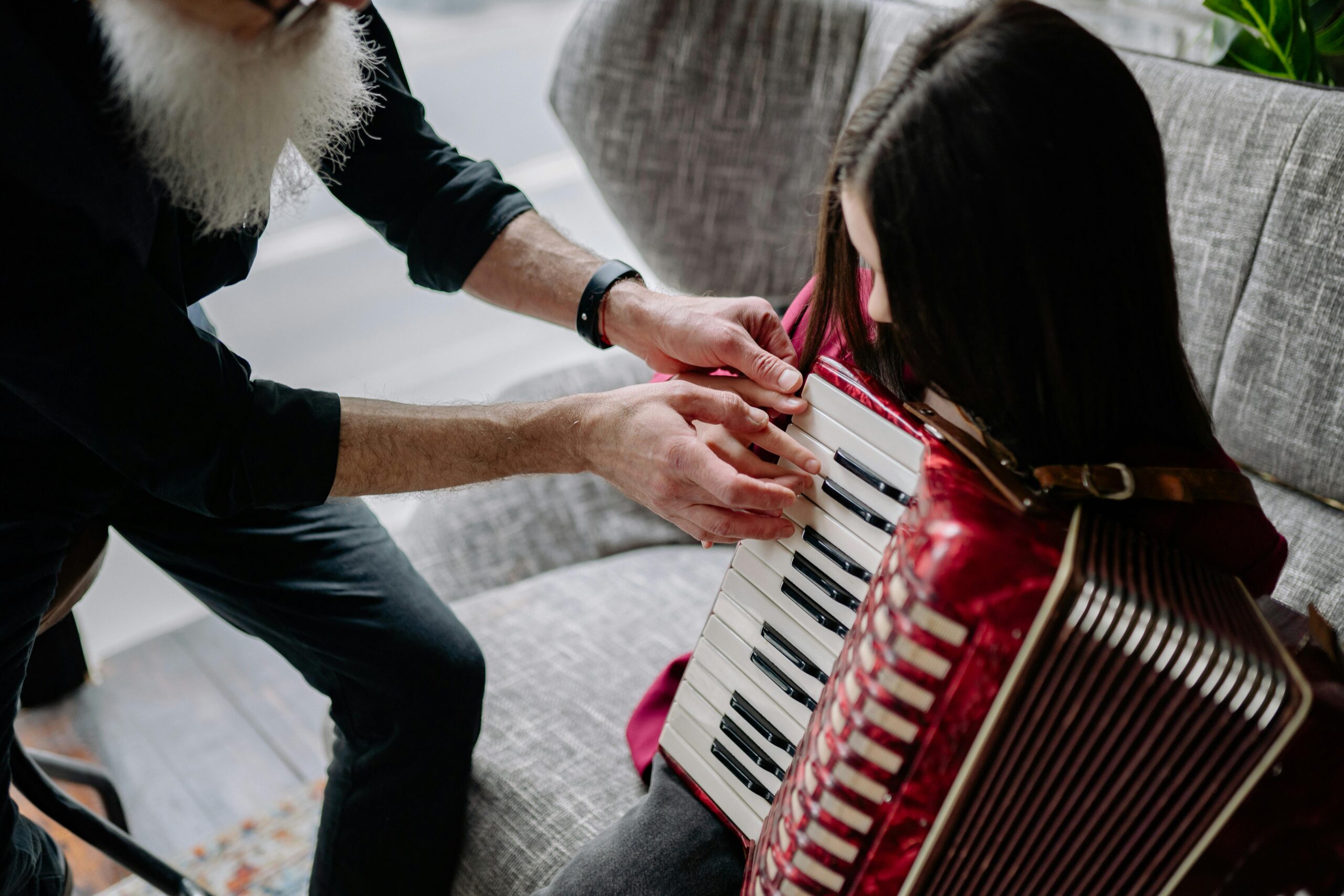
Consider private lessons with an experienced accordion teacher, either locally or through video conferencing. A skilled instructor identifies technical issues, suggests appropriate repertoire, and provides personalized guidance that accelerates learning beyond what self-study alone achieves.
Accordion festivals and workshops create immersive learning experiences while connecting you with fellow enthusiasts. These events feature concerts, masterclasses, and opportunities to try different accordion styles and instruments. The community aspect provides motivation and inspiration for continued growth.
🔧 Basic Maintenance and Care
Proper accordion care ensures your instrument remains playable for generations. Store your accordion in its case when not in use, protecting it from temperature extremes, humidity, and physical damage. Avoid leaving it in hot cars or cold garages where environmental conditions might harm the reeds or bellows.
Clean the exterior regularly with a soft, slightly damp cloth. Avoid harsh chemicals that might damage finishes. The keyboard can be wiped gently, but never allow moisture to seep between keys into the interior mechanism.
Annual professional servicing by qualified accordion technicians keeps your instrument in optimal condition. They check for air leaks, regulate action, tune reeds, and address wear before minor issues become major repairs. This preventive maintenance preserves both playability and value.
🎭 Performance Tips for Nervous Beginners
Sharing your music with others, even in casual settings, represents an important step in your accordion journey. Start small by playing for supportive friends or family members. These low-pressure situations build performance confidence gradually.
Prepare thoroughly by practicing your pieces until they feel completely secure. Perform your entire program multiple times at home, simulating concert conditions. This mental rehearsal prepares you for the different feeling of playing for an audience.
Accept that nervousness is normal and even experienced performers feel butterflies. Channel that energy into your playing rather than fighting it. Remember that audiences want you to succeed and appreciate the courage it takes to perform.
🚀 Advancing Your Skills Beyond Basics
Once foundational techniques feel comfortable, numerous paths lead to advanced accordion playing. Exploring different musical styles—from classical transcriptions to jazz improvisation—expands your capabilities and keeps learning fresh and exciting.
Advanced bellows techniques like bellows shake, ricochet, and controlled crescendos add sophisticated expression. Register switches, present on many accordions, change the tonal color by engaging different reed combinations, offering orchestral variety within a single instrument.
Music theory study deepens your understanding of harmony, melody, and structure. This knowledge enables you to learn pieces more quickly, improvise accompaniments, and even compose your own accordion music. Theory transforms you from someone who plays notes into a true musician.
🌟 Embracing the Accordion Lifestyle
The accordion becomes more than an instrument—it’s a gateway to rich cultural traditions and a vibrant global community. Whether you pursue folk music, classical repertoire, contemporary pop arrangements, or experimental sounds, the accordion accommodates diverse musical interests.
Many accordionists find joy in ensemble playing, joining accordion orchestras or chamber groups. Others prefer solo performance or accompanying singers. Some use the accordion in unexpected contexts like rock bands, experimental music, or world music fusion projects.
Your accordion journey is uniquely yours. Progress at your own pace, celebrate small victories, and remember that every accomplished player started exactly where you are now. The combination of dedication, patience, and genuine love for the music will carry you forward through challenges toward the deeply satisfying experience of expressing yourself through this remarkable instrument. The bellows are your breath, the keys your voice—now it’s time to sing. 🎶
